
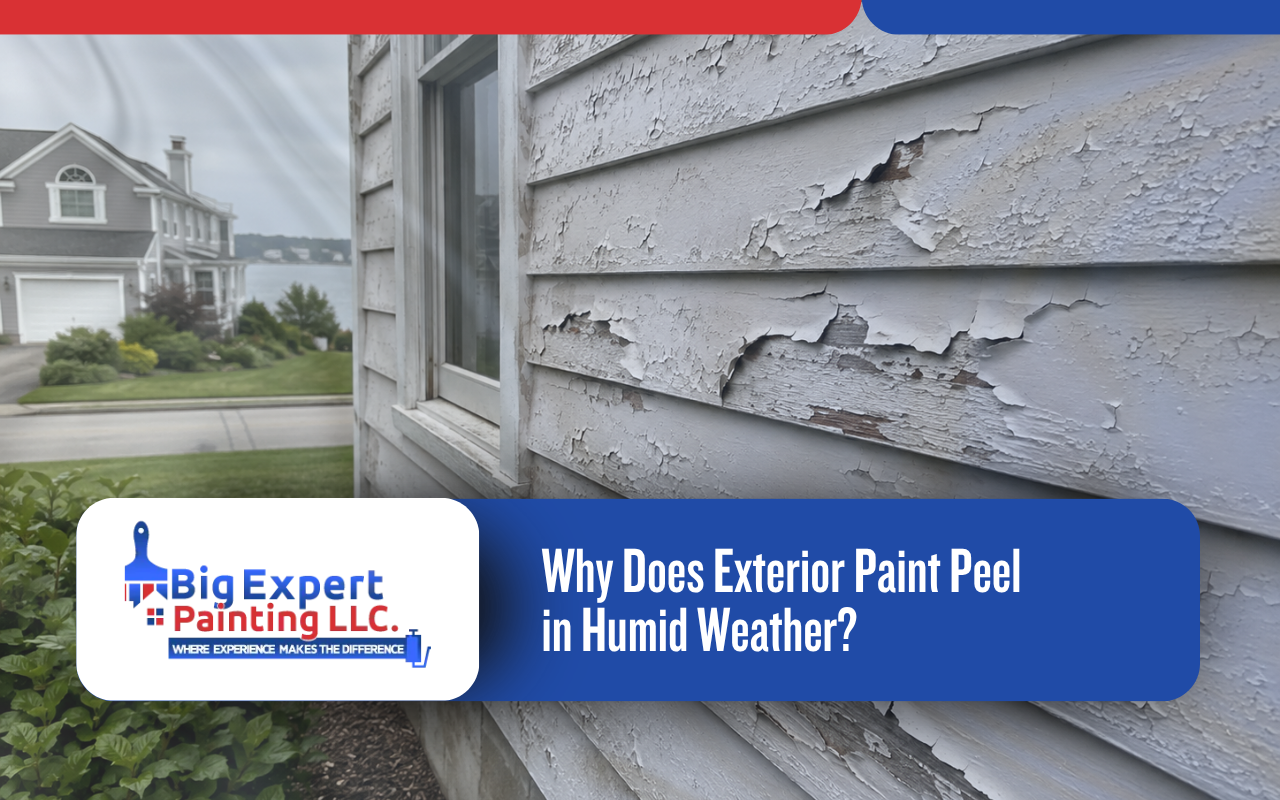
Why Does Exterior Paint Peel in Humid Weather?
Exterior paint peels in Long Island humidity because damp air, trapped vapor, poor surface prep, and temperature swings weaken paint adhesion. Moisture pushes from behind the coating, creates blisters, and lifts the paint film until peeling spreads across siding, trim, or exposed exterior surfaces.
Peeling paint often starts before homeowners see the first loose edge. In Long Island, damp air, shaded siding, and seasonal storms can weaken a finish fast.
With Big Expert Painting LLC, we look for the real moisture source before repainting, so your next Exterior Painting Services in Long Island plan starts with better protection.
Understand How Long Island Humidity Weakens Paint
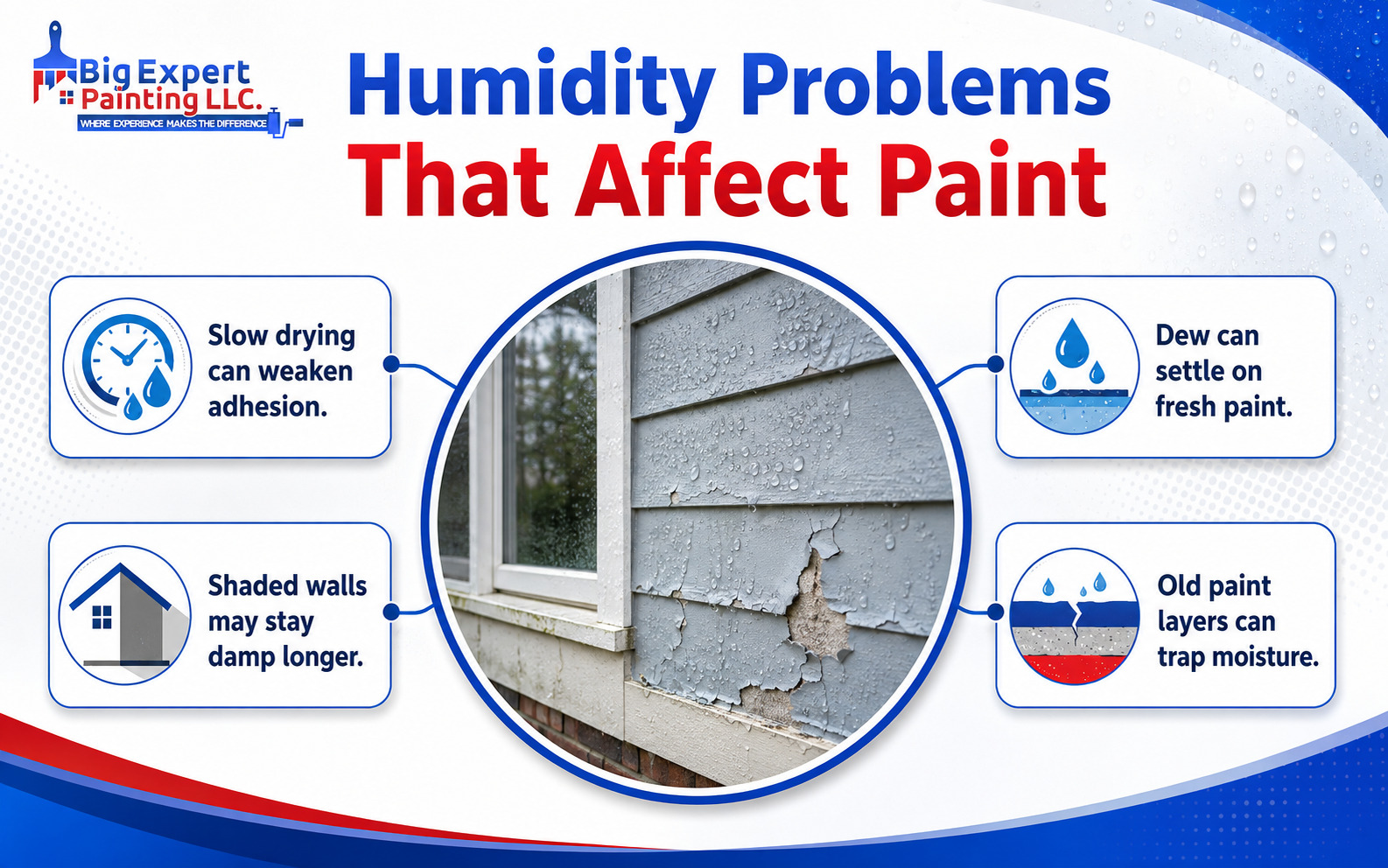
Humidity slows drying and keeps moisture near the paint film. When paint cannot cure well, the bond stays weak.
Over time, damp air, dew, and shaded areas make peeling more likely, especially on siding that already has small cracks or old coating layers.
At Big Expert Painting LLC, we explain why exterior paint peels in Long Island humidity before recommending a repainting plan. Long Island homes often face coastal air, rain, and warm damp days.
These conditions can make fresh paint feel dry on top while moisture remains underneath.
Watch for Blisters Before Peeling Spreads
Moisture behind paint creates pressure that lifts the coating from the surface. The first sign may be a bubble, soft blister, or raised paint patch.
Once that pocket breaks, the exposed edge allows more water to enter and peeling spreads faster. Paint blistering humidity issues often appear under eaves, near trim joints, or on walls with poor airflow.
According to University of Minnesota Extension, peeling, cracking, or blistering paint can be a symptom of excess moisture in a home. That is why surface checks matter before new paint goes on.
Early Paint Blistering Signs
- Raised paint bubbles after humid weather
- Soft edges around peeling areas
- Dark spots near cracks or seams
- Paint that lifts in sheets
Key Takeaway
Humidity can weaken paint before large peeling appears. Blisters, soft edges, shaded damp areas, and peeling sheets often point to moisture under the coating.
Compare Paint Peeling Causes and Next Steps
Peeling paint can come from several moisture and preparation problems. A clear comparison helps homeowners understand whether the issue needs cleaning, drying, repair, priming, or a full repainting plan.
Exterior Paint Peeling Guide
| Problem | Why It Causes Peeling | Helpful Next Step |
|---|---|---|
| High humidity during painting | Paint may dry slowly and bond poorly. | Wait for suitable conditions before repainting. |
| Moisture behind paint | Trapped vapor can push the coating away from the surface. | Find the moisture source before adding new paint. |
| Dirty or chalky siding | Paint cannot grip a weak or contaminated surface. | Clean, scrape, and prepare the surface properly. |
| Open seams or cracks | Rain and dew can enter behind the finish. | Seal gaps and repair damaged areas before priming. |
| Old failing paint layers | New paint may lift when the old layer separates. | Remove loose coating and prime bare surfaces. |
Prepare Surfaces to Reduce Paint Blistering
Surface preparation reduces paint failure because paint needs a clean, dry, and stable base. If dirt, mildew, old flakes, or damp wood remain under the coating, the new layer cannot hold well during humid weather or seasonal movement.
During estimates with Big Expert Painting LLC, we check loose paint, surface stains, gaps, and areas where water may enter. We also look at trim, siding joints, and old coating layers.
This helps us decide whether scraping, sanding, washing, drying, priming, or repair work should happen first.
Exterior Paint Preparation Steps
- Remove loose and failing paint
- Clean dirt, chalk, and mildew
- Let damp areas dry fully
- Use primer on bare surfaces
- Seal gaps before repainting
Key Takeaway
New paint needs a stable base. Cleaning, scraping, drying, sealing, and priming help the coating bond instead of trapping moisture underneath.
Account for Temperature Swings and Cracks
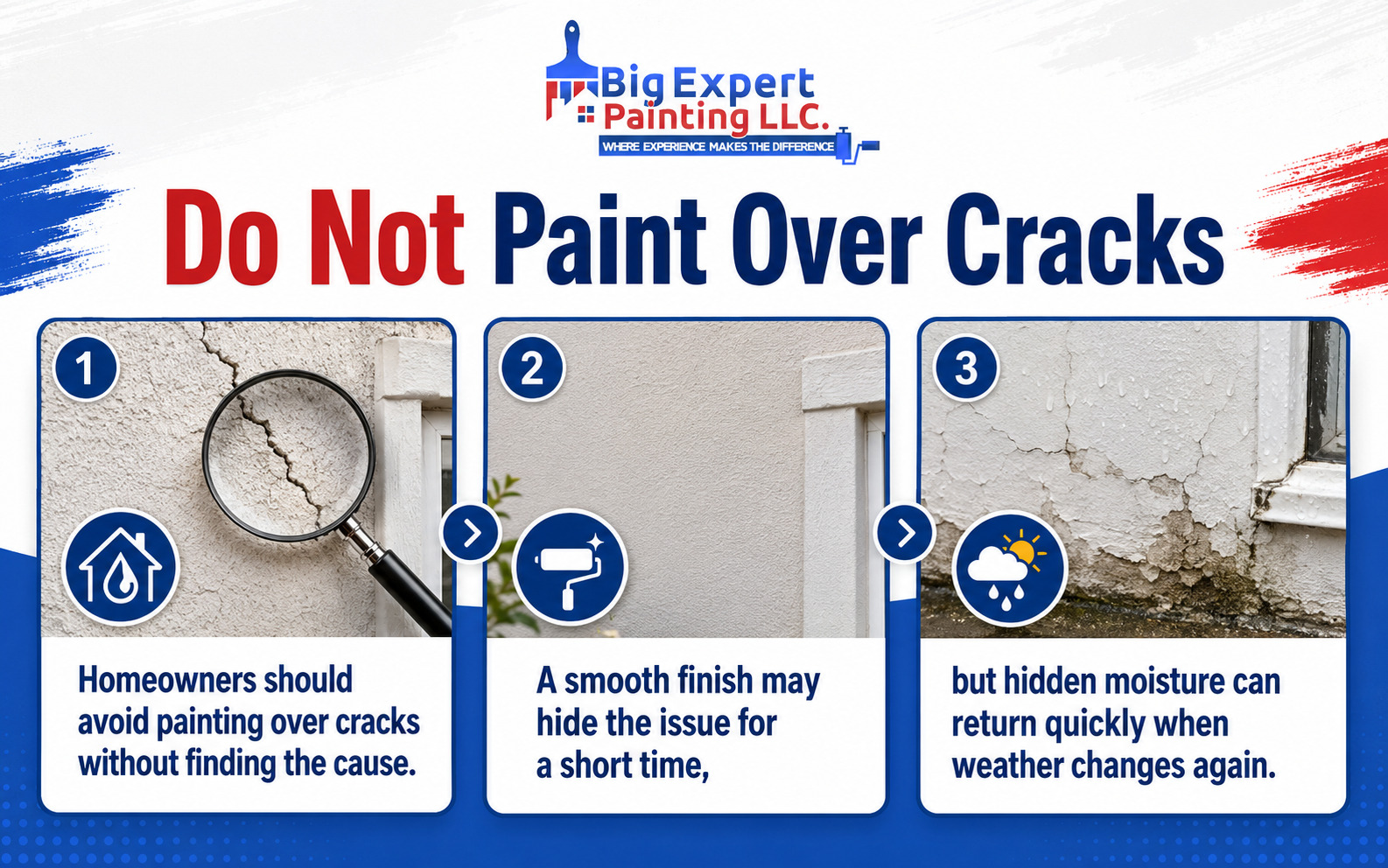
Temperature changes make siding and paint expand and contract. Small cracks can open when the coating moves too much.
Those cracks let water enter, which can lead to moisture behind paint and more peeling during the next humid period. South-facing walls, trim edges, and older siding may show damage first.
Afternoon heat can stress the paint film, while cooler nights tighten the surface again. This cycle slowly breaks down weak areas.
For older homes, the U.S. EPA warns that deteriorating lead-based paint can be a hazard, so damaged paint should be handled carefully.
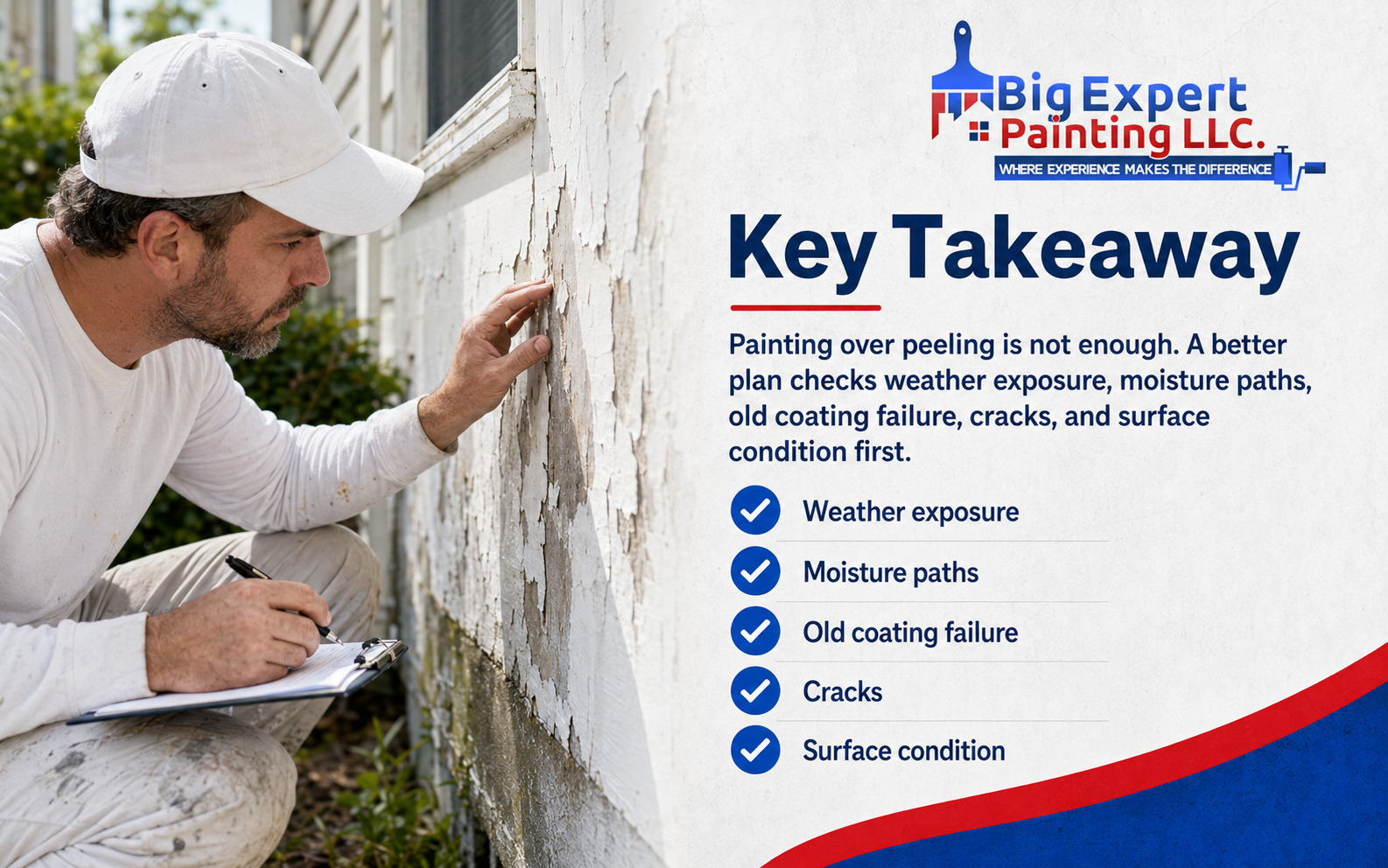
Follow a Painting Process That Finds the Cause
A clear process helps homeowners understand what will happen before work starts. Before repainting, we ask about peeling areas, past paint work, moisture concerns, and the surfaces involved.
Then we review the exterior and explain practical next steps. When customers contact Big Expert Painting LLC, we ask where the peeling exterior paint appears and how long it has been visible.
Photos can help us understand the issue before a closer review. For severe peeling, we may recommend a full exterior assessment before any coating decision.
Project Review Steps
- We review the damaged areas.
- We check for moisture paths and loose paint.
- We explain prep and primer needs.
- We discuss coating options for humid conditions.
- We help plan the next practical step.
If your home already shows widespread peeling, use Contact Our Painting Team to request guidance before the damage spreads.
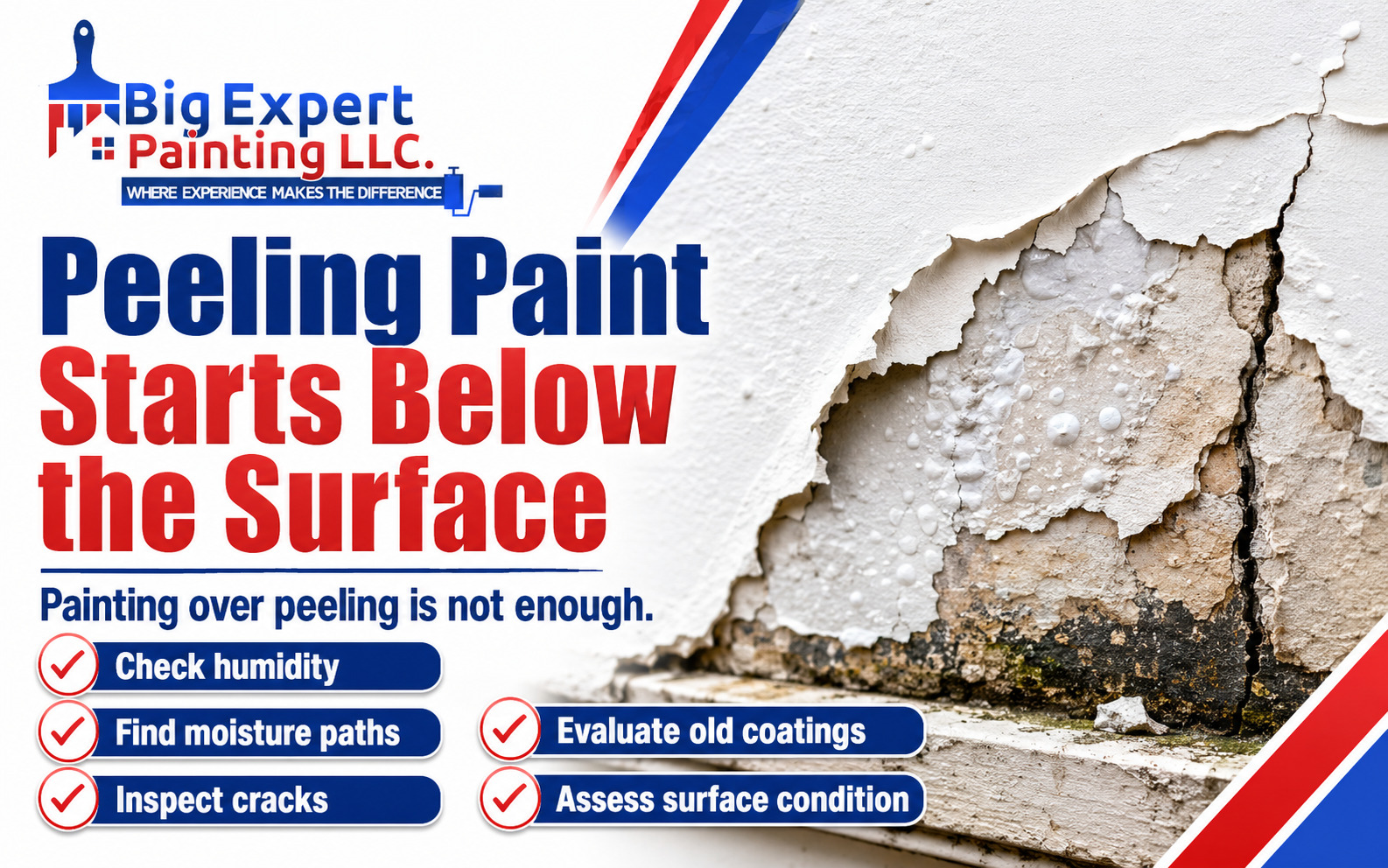
Prevent Repeated Peeling With Professional Exterior Painting
Professional exterior painting helps prevent repeated peeling by correcting the cause before adding new paint. A durable finish depends on moisture control, proper prep, suitable primer, and paint products that can handle outdoor movement and humid conditions.
With Big Expert Painting LLC, you get a practical review of your siding, trim, and existing coating. We do not recommend covering damage without checking what caused it.
The right plan can protect curb appeal, reduce repair stress, and help your home resist Long Island weather longer. Helpful decisions include choosing coatings made for exterior use, avoiding damp painting conditions, and repairing open seams.
Homeowners can also learn more about Exterior Painting Services in Long Island before scheduling a project review.
Frequently Asked Questions
Why does exterior paint peel after humid weather?
Exterior paint peels after humid weather when moisture weakens the bond between paint and surface. Damp air can slow curing, enter small cracks, or collect behind old paint. Once the coating lifts, peeling can spread unless the moisture source is corrected.
Can paint blistering humidity problems be fixed without repainting?
Small blisters may be repaired if the damage is limited and the surface underneath is sound. The damaged paint must be removed, dried, cleaned, and primed before touch-up work. For larger areas, request Contact Our Painting Team for a closer review.
What causes moisture behind paint on exterior walls?
Moisture behind paint can come from rain, dew, leaks, open seams, poor ventilation, or vapor moving through wall materials. It often collects where airflow is weak. A careful inspection can help find whether the moisture starts outside, inside, or both.
Should peeling exterior paint be removed before repainting?
Yes, loose peeling exterior paint should be removed before repainting. New paint needs a stable surface to grip. Scraping, sanding, cleaning, drying, and priming help create a better base. Learn about Exterior Painting Services in Long Island before planning the work.
When should I call a painter for peeling paint?
Call a painter when peeling spreads, blisters return, bare wood shows, or damp spots appear near trim and siding. Early help can reduce deeper damage. Use Contact Our Painting Team if you want guidance before repainting.
Start Protecting Your Exterior Finish With Clear Guidance
When you book with Big Expert Painting LLC, we help you understand why exterior paint peels in Long Island humidity and what your home needs next.
If peeling, bubbling, or soft paint edges are showing, schedule a review through Contact Our Painting Team and protect your exterior before the problem grows.
References
Follow Us


Book Now!