
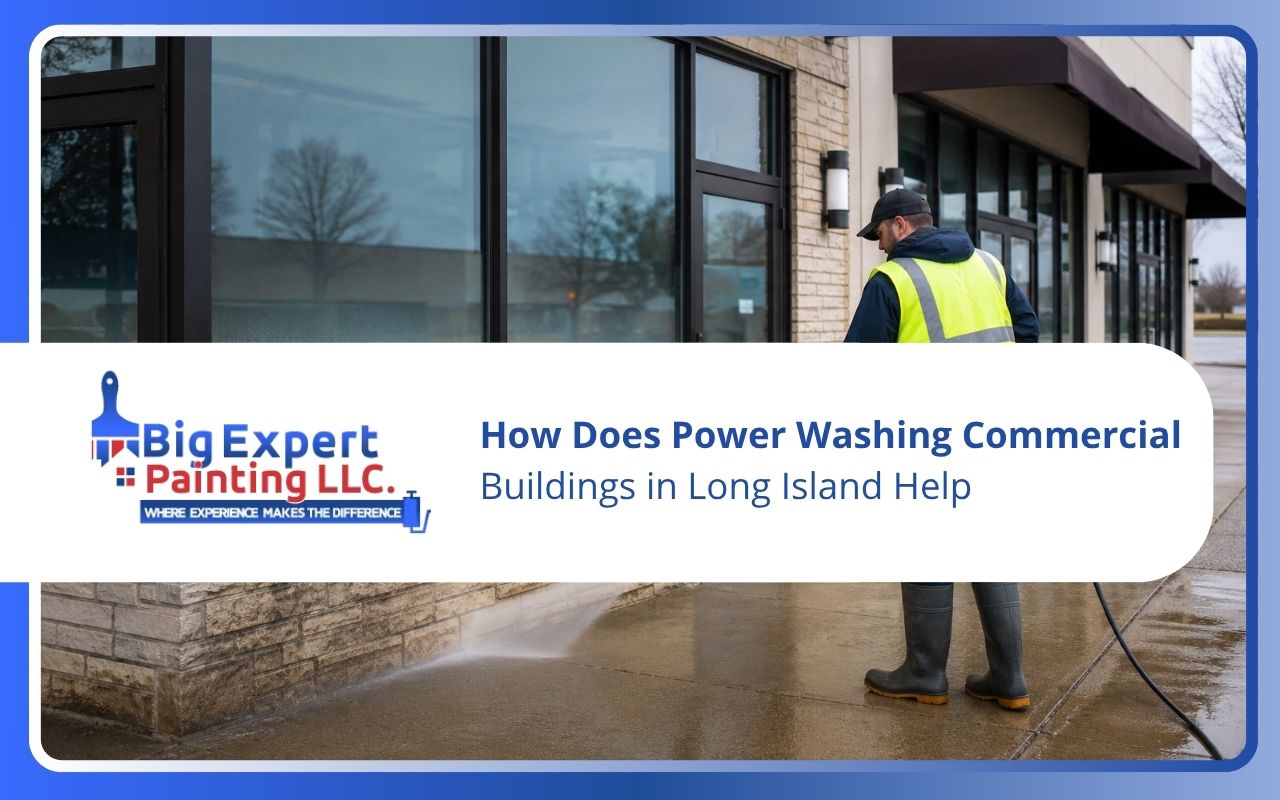
How Does Power Washing Commercial Buildings in Long Island Help
Clean commercial exteriors help customers notice your business for the right reasons. In Long Island, salt air, rain, traffic dust, mildew, and foot traffic can quickly dull storefronts, walls, walkways, and signs. Therefore, regular washing supports curb appeal, safety, paint prep, and long-term surface care.
How Does Power Washing Commercial Buildings in Long Island Help
Power washing commercial buildings in Long Island helps remove grime, salt, mildew, grease, and surface stains before they damage exterior materials or weaken curb appeal.
Power washing commercial buildings in Long Island means using controlled water pressure and safe cleaning methods to clean business exteriors. Property managers, store owners, landlords, and facility teams need it when surfaces look stained, slippery, or weathered. It solves buildup problems before they affect appearance, safety, paint bonding, and customer trust.
Protect Exteriors Through Consistent Commercial Cleaning Plans Today
Regular washing protects business exteriors by removing salt, dirt, mildew, and grease before buildup becomes harder to clean. It also helps storefronts, sidewalks, walls, and entry areas look cared for, which supports a better first impression for customers, tenants, and visitors.
At Big Expert Painting LLC, we see how Long Island weather affects commercial surfaces. Salt air can leave deposits on brick, concrete, metal, glass, and painted trim. Moreover, seasonal moisture can help mildew grow on shaded walls and walkways.
The U.S. Environmental Protection Agency explains that stormwater runoff can carry pollutants into local waterways. Therefore, responsible washing should guide water flow away from sensitive drains, landscaping, and public areas.
- Clean storefronts help customers see a business as active and cared for.
- Clean walkways help reduce slick buildup near entrances.
- Clean walls support better inspections before painting or repairs.
- Clean awnings and signs improve visibility from the street.
For routine care, review our surface cleaning service and plan washing before heavy buildup returns.
Reduce Safety Risks Around Storefronts And Entryways
Exterior cleaning helps reduce slip risks by removing algae, mildew, grime, and residue from walkways, ramps, and entrances. Because customers and employees use these areas daily, clean surfaces support safer movement and a more professional business environment.
The CDC and NIOSH report that falls can happen in any workplace, and fall injuries are preventable. They also reported 805 worker deaths from falls in 2020 and 211,640 severe private-industry injuries requiring days away from work.
Therefore, storefront cleaning in Long Island should include areas where people walk, wait, or enter. These zones often collect rainwater, leaves, gum, oil, and traffic dust.
| Problem Area | Helpful Cleaning Step |
|---|---|
| Sidewalks and entry paths | Remove algae, grime, and slippery buildup before peak traffic. |
| Storefront glass and frames | Rinse residue carefully so the front looks clear and bright. |
| Painted trim and doors | Use controlled pressure to protect coatings while removing dirt. |
| Loading or service areas | Clean grease and tracked-in dirt with the right surface method. |
Key Takeaway: Regular exterior cleaning protects curb appeal and supports safer business entrances before buildup becomes a larger concern.
Select Proper Equipment For Cleaner Commercial Surfaces
The right equipment helps clean commercial surfaces without causing avoidable damage. Adjustable pressure, proper nozzles, extension tools, and surface-safe detergents help match the cleaning method to brick, stucco, concrete, painted siding, glass, and metal details.
Not every building exterior needs the same pressure. For example, concrete may handle stronger cleaning than painted trim. However, older brick, stucco, and wood details often need a softer method.
Good building exterior cleaning starts with a surface check. We look for loose paint, cracked masonry, open seams, weak caulk, and exposed electrical areas. Then, the washing method can be adjusted before work begins.
- Use wider spray patterns for delicate surfaces.
- Use stronger settings only on durable materials.
- Use extension tools instead of unsafe ladder shortcuts.
- Use mild detergents when surface stains need extra help.
- Use test spots before cleaning older or painted areas.
Prepare Surfaces Before Paint Bonds And Lasts
Pre-paint cleaning helps paint bond better by removing chalk, dirt, mildew, flaking material, and surface residue. A clean exterior gives primer and paint a better base, which supports smoother coverage and a longer-lasting finish.
Big Expert Painting LLC uses washing as a key step before many exterior painting projects. First, we remove buildup. Then, we inspect for loose paint, gaps, cracks, and moisture issues that may need repair.
Pre-paint power washing is especially useful for storefronts, office buildings, restaurants, and mixed-use properties. However, the surface must dry before sanding, priming, or painting begins. Otherwise, trapped moisture can weaken the final coating.
The EPA stormwater program explains that runoff controls help prevent pollutants from washing into local surface waters. Because of that, commercial washing should include smart water flow planning during prep work.
- Walk the site and mark delicate areas.
- Move planters, signs, furniture, and loose items.
- Cover outlets, fixtures, and sensitive features.
- Wash from safer distances before increasing pressure.
- Let surfaces dry before repairs or painting.
When painting is the next step, explore our commercial coating support for a cleaner project plan.
Key Takeaway: Proper equipment and pre-paint washing help protect surfaces, improve paint prep, and reduce avoidable project problems.
Improve Power Washing Commercial Buildings In Long Island Outcomes
A clear washing process creates more even results and fewer missed areas. The safest approach includes inspection, surface preparation, detergent application when needed, controlled rinsing, spot checks, and final cleanup around entrances, landscaping, drains, and walkways.
Start by checking the building during daylight. This helps reveal stains, shaded mildew, loose paint, and areas where water may collect. Next, protect lights, signs, outlets, and door hardware.
Then, apply detergent from bottom to top when the surface needs it. After a short dwell time, rinse from top to bottom. This keeps dirty water moving away from cleaned areas.
Power washing commercial buildings in Long Island should always account for customers, employees, parking flow, and nearby businesses. Therefore, many commercial jobs work best during slower hours or phased sections.
- Inspect the surface and note risk areas.
- Clear the work zone before washing starts.
- Apply the right cleaner for the surface.
- Rinse evenly from high areas to low areas.
- Review the surface before reopening the area.
Solve Common Stains Without Damaging Building Materials
Common exterior stains need different cleaning choices because oil, mildew, salt, gum, graffiti, and rust do not respond the same way. Testing a small area first helps prevent damage while finding the safest way to clean the surface.
For oil near service areas, a surface-safe degreaser may be needed. For mildew, the cleaner must help treat the growth, not only rinse the dark stain. For gum, heat and focused cleaning may help remove residue.
However, high pressure is not always the answer. Too much force can etch concrete, scar wood, damage mortar, or lift paint. Therefore, we recommend matching pressure to the surface, stain, and building age.
Power washing commercial buildings in Long Island works best when the goal is surface care, not just speed. A careful method protects materials while restoring a cleaner look.
Key Takeaway: A step-by-step process and stain-specific methods help clean commercial exteriors while protecting building materials.
Compare Professional Service With Do It Yourself Cleaning
Professional cleaning is often better for larger buildings, delicate surfaces, busy storefronts, and pre-paint preparation. DIY cleaning may work for small touch-ups, but commercial properties usually need safer planning, stronger equipment, and better control over pressure, runoff, and timing.
Big Expert Painting LLC brings 12 years of experience, according to our contact page. That experience helps us guide business owners through cleaning needs, surface concerns, painting prep, and scheduling around operating hours.
DIY washing can look simple at first. However, commercial buildings may include high walls, electrical features, signs, glass, awnings, and public walkways. These details increase risk when pressure, detergent, or runoff is handled poorly.
- Choose professional service for large exteriors or high areas.
- Select a professional service before exterior painting.
- Pick Up a professional service when the surface is old or delicate.
- Opt DIY only for small, low-risk touch-ups.
- Choose expert help when customers need safe access.
For planning support, you can request a site visit and discuss your building’s condition.
Maintain Cleaner Results With Simple Exterior Habits
Maintenance keeps commercial exteriors cleaner between major washings. Small habits, such as checking shaded walls, clearing debris, rinsing entry residue, and watching for peeling paint, help reduce stains and support a better long-term cleaning schedule.
After washing, inspect the property each month. Look at doors, corners, sidewalks, walls near landscaping, loading zones, and shaded siding. These areas often show dirt first.
Also, plan cleaning before repainting, after heavy pollen seasons, or after long wet periods. For Long Island businesses, salt air and seasonal storms can make exterior care more important.
Big Expert Painting LLC covers 30 miles around Amityville, NY, according to our site. Therefore, local commercial owners can plan building exterior cleaning with a team familiar with area conditions.
- Check entrances for slick buildup.
- Remove leaves and debris near walls.
- Schedule touch-ups before stains spread.
- Review paint condition after washing.
- Ask for help before using high pressure.
Key Takeaway: Professional support and simple maintenance habits help commercial exteriors stay cleaner, safer, and ready for future painting.
Frequently Asked Questions
How do I know my storefront needs washing?
Your storefront may need washing when glass frames, doors, sidewalks, signs, or walls look dull, stained, green, or slippery. For help with storefront cleaning in Long Island, review our surface cleaning service.
When should I schedule cleaning before exterior painting?
Schedule cleaning before sanding, priming, or painting begins. The surface should be washed, inspected, repaired, and allowed to dry. For a full repaint plan, visit our exterior finish planning.
What happens if commercial exterior grime stays too long?
Long-term grime can stain surfaces, hide cracks, hold moisture, and make a business look neglected. It can also make painting prep harder. For larger properties, our business property painting page explains related support.
Why is controlled pressure better than maximum pressure?
Controlled pressure cleans the surface while lowering the risk of etching concrete, lifting paint, damaging mortar, or forcing water into gaps. A careful method protects your building and improves cleaning results.
How do I request help for my commercial building?
You can describe your property, timing needs, and surface concerns through our contact our local team page. Then, we can review the best cleaning or painting preparation plan.
Refresh Your Business Exterior With Safer Cleaning Support
Big Expert Painting LLC is ready to help your commercial property look cleaner, safer, and better prepared for paint. Therefore, request a site visit and let our team guide your next exterior cleaning step.
References
Follow Us


Book Now!