
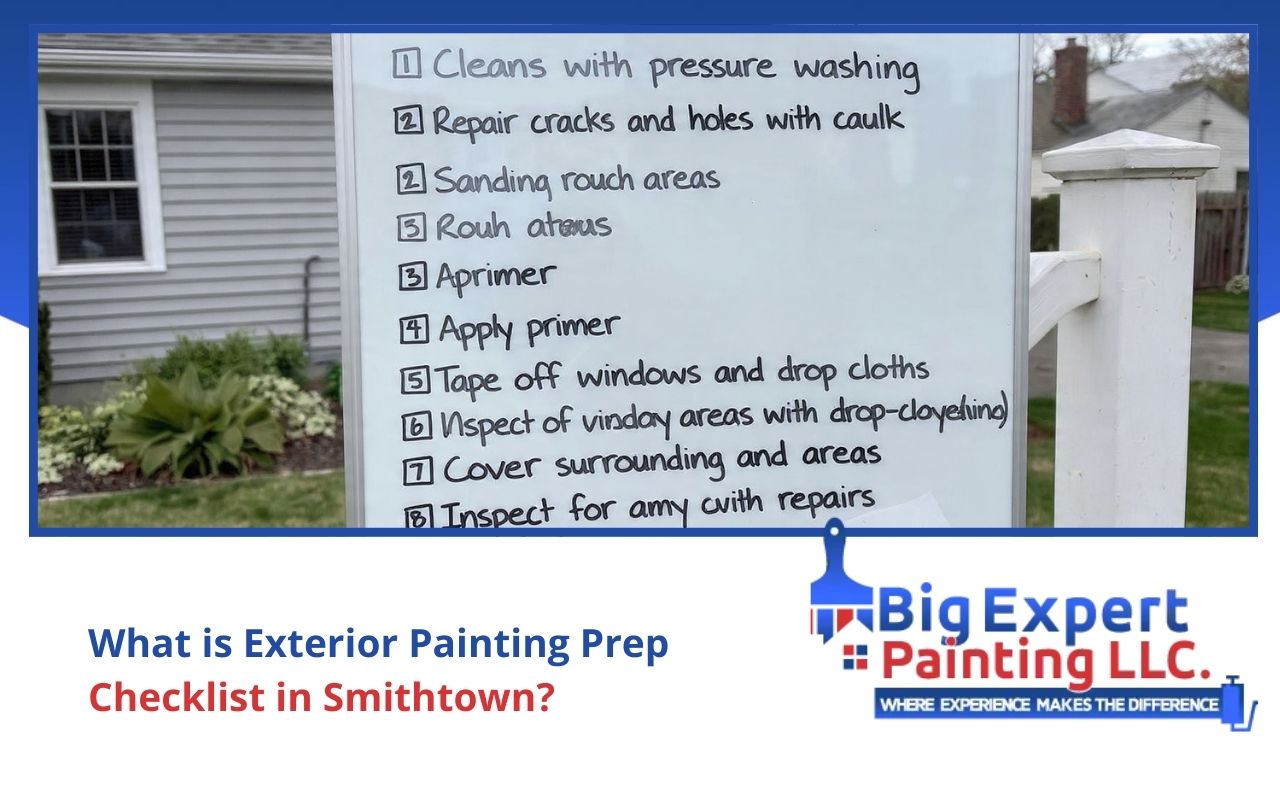
What is Exterior Painting Prep Checklist in Smithtown?
Painting a home exterior in Smithtown isn’t just cosmetic; it’s a weather-defense upgrade. This guide turns the job into an easy, step-by-step plan, so you can avoid peeling, flashing, and early failure. You’ll learn what to inspect, how to clean, and when to prime—plus timing for Suffolk County weather. Use this checklist to prep confidently and paint with lasting results.
What is Exterior Painting Prep Checklist in Smithtown?
Exterior Painting Prep Checklist in Smithtown is the ordered prep sequence that makes paint last: inspect, clean, repair, scrape & sand, re-caulk gaps, choose the right primer, then paint in safe weather windows. When you follow the steps in order, you improve adhesion and reduce moisture problems that can shorten the life of your finish.
Exterior Painting Prep Checklist in Smithtown: Quick audit
Start with a slow walk around the property. In Smithtown, salt air, humidity, and temperature swings can accelerate failure on trim, soffits, and exposed fascia—so document everything before you touch a scraper.
- Identify failures: peeling paint, chalking, hairline cracks, soft/rotted wood, rust on metal, and loose boards.
- Spot water pathways: failing caulking at windows/doors, open joints, and end-grain exposure on trim.
- Check growth: mildew or algae on shaded siding, brick, or stucco (cleaning comes before sanding).
- Map repairs: mark areas needing patching, board replacement, or extra sanding to feather edges.
Tools and materials to stage before you start
Staging supplies upfront keeps the workflow smooth and safer on ladders. If you’re comparing DIY prep vs. a pro approach, review what’s typically included in Exterior Painting Services.
- Access & protection: stable ladder/scaffolding, drop cloths/tarps, painter’s tape, plastic sheeting.
- Surface prep: scraper, wire brush, sanding blocks/poles, 80–150 grit paper, dust brush/tack cloth.
- Repairs: exterior filler, putty knife, replacement trim pieces (as needed), exterior-grade fasteners.
- Sealants: caulking gun, paintable exterior caulk, backer rod for wider joints.
- Safety: goggles, gloves, respirator/dust mask, and lead-safe practices for older homes.
Clean, scrape & sand, and repair for strong adhesion
Cleaning removes film that blocks bonding, while scrape & sand creates a tight surface for primer. Let everything dry completely—especially after washing—before moving to repairs or coatings.
- Wash first: low-pressure rinse and scrub to remove dirt, chalk, mildew, and salt residue.
- Scrape loose paint: work top-to-bottom; stop when edges are firm, not brittle.
- Feather edges: sand transitions so old paint doesn’t “telegraph†through the finish.
- Repair damage: fill small cracks/holes; replace rotten wood; tighten loose boards and trim.
- Dust removal: brush or wipe down so primer bonds evenly.
Caulking: stop moisture before it starts
Caulking is your moisture-management step. In coastal Suffolk County weather, tiny gaps can funnel water behind paint and trigger peeling—especially around trim details.
Where caulking matters most
Prioritize joints that move: window/door casings, corner boards, trim-to-siding seams, and penetrations (vents, hose bibs, lights). Use backer rod on wider gaps, then apply smooth, paintable exterior caulk. Avoid sealing weep holes or areas designed to drain.
Primer selection that matches your substrate
Primer selection should be based on what you’re painting and what you uncovered during prep. Priming is essential on bare wood, repaired areas, stained spots, and anywhere you sanded through old coatings.
Quick primer matching guide
Wood: bonding or stain-blocking primer for tannins and patched sections. Masonry/stucco: masonry primer that penetrates and bonds. Metal: rust-inhibitive metal primer. Apply primer evenly, and give it full cure time before topcoats for the strongest adhesion.
Plan around Suffolk County weather for better durability
Weather timing is as important as technique. Avoid painting in direct midday sun, high wind, fog, or when rain is likely before the coating cures. Aim for stable temperatures and lower humidity windows when possible, and follow the manufacturer’s temperature range on the can.
If you want color ideas that still perform well outdoors, pair prep with smart product choices and review Exterior Paint Color Trends 2025 for curb-appeal-friendly options.
How to prep an exterior for painting in Smithtown
- Inspect and document all failing paint, rot, cracks, and open seams.
- Protect the site by moving furniture, trimming shrubs, and covering windows/fixtures.
- Wash and dry fully so moisture isn’t trapped under coatings.
- Scrape & sand until edges are tight and transitions are feathered.
- Repair and re-caulk to block water intrusion and stabilize trim/siding.
- Prime correctly based on substrate and exposure.
- Paint in thin coats during weather-safe windows, maintaining a wet edge.
Following this Exterior Painting Prep Checklist in Smithtown helps your finish look more uniform and hold up longer against seasonal swings.
Frequently Asked Questions
How long should prep take before exterior painting in Smithtown?
Most projects spend more time on prep than painting. Washing, drying, scrape & sand work, repairs, and caulking can take several days depending on home size and paint condition. If the schedule needs to be tight (or your substrate needs repairs), compare DIY effort with Exterior Painting Contractors.
Do I always need primer, or can I paint over old paint?
Prime whenever you expose bare material or repair areas. If you sand through to wood, patch trim, or remove peeling sections, primer selection becomes critical for bonding and stain control. Spot-priming may be enough in good-condition areas, while full priming helps if the surface is uneven or chalky.
What’s the most common reason exterior paint fails early in Suffolk County?
Moisture plus poor adhesion is the usual culprit. Skipping thorough cleaning, underestimating humidity, or failing to seal gaps with proper caulking can push water behind paint. Also, painting too close to rain or heavy dew can interrupt curing and lead to blistering and peeling within a season.
Can I get help choosing colors that won’t show dirt or fade fast?
Yes—color performance matters as much as style. Mid-tone neutrals often hide dust and weathering better than very dark or very bright shades, and finishes with quality UV resistance help slow fading. Use Exterior Paint Color Trends 2025 to shortlist options that fit your home’s architecture.
How do I request an on-site evaluation or a quote in Smithtown?
An on-site evaluation helps confirm repairs, primer selection, and timing. Share photos and note any peeling, rot, or open seams so the estimate reflects real prep needs. You can request a visit and discuss scope through Contact, or explore what’s included in Exterior Painting Services.
When to hire a Smithtown exterior painting pro
If any of the items below apply, a professional can reduce risk and improve longevity—especially when prep is extensive or safety is a factor.
- High or complex access: multiple stories, steep grades, dormers, or tall gables.
- Substrate damage: rot replacement, recurring moisture intrusion, or widespread cracking.
- Heavy peeling: large scrape & sand scope or uncertain existing coatings.
- Commercial needs: tight timelines, public-facing surfaces, or multi-unit properties—see Commercial Exterior Painting.
Whether you DIY or hire out, using the Exterior Painting Prep Checklist in Smithtown keeps the project organized and protects the finish for the long term.
References
Follow Us


Book Now!