
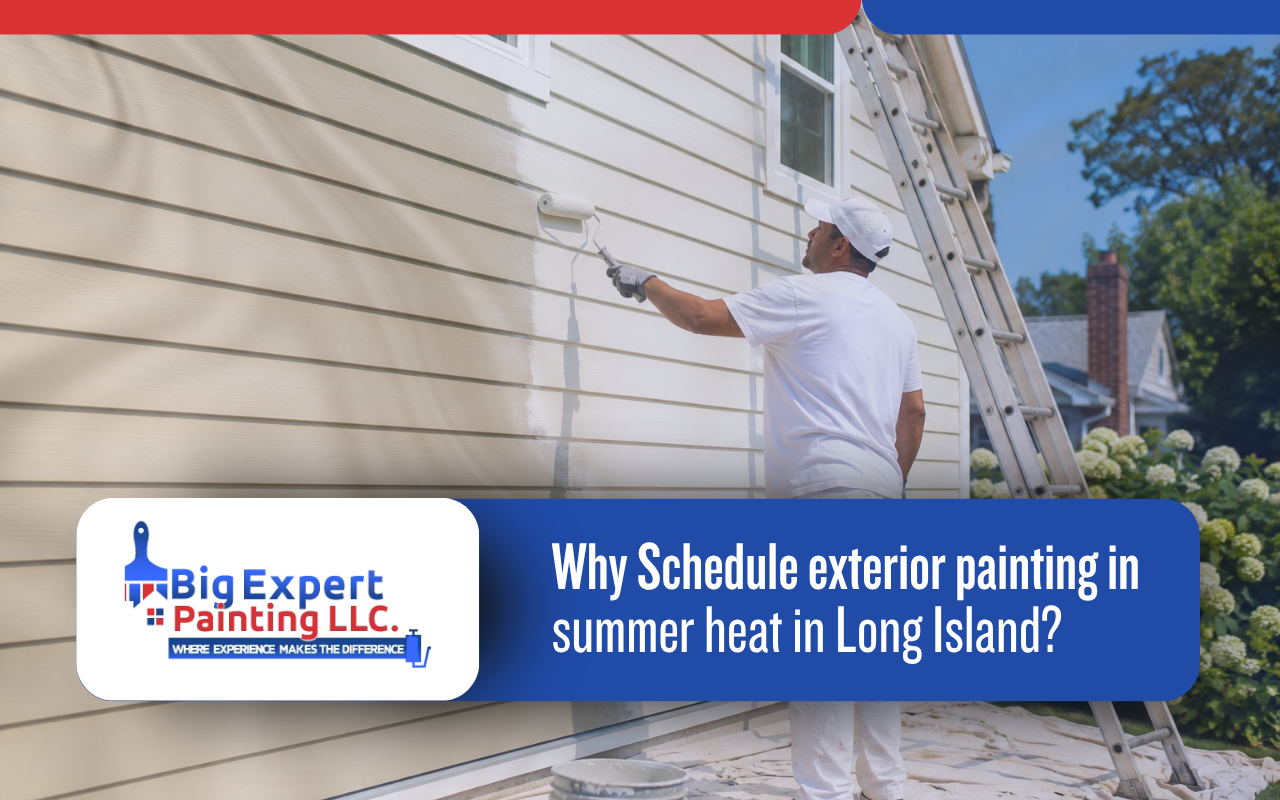
Why Schedule exterior painting in summer heat in Long Island?
Exterior painting in summer heat in Long Island works best when the surface is clean, dry, shaded, and painted during cooler parts of the day. Heat and humidity affect drying, so careful timing helps the paint bond better and look smoother.
Why Schedule exterior painting in summer heat in Long Island?
Summer exterior painting is the careful planning, preparation, and coating of outdoor home surfaces during warm months. Homeowners need it when siding, trim, doors, or exterior details look faded, peeling, or worn. The goal is to protect the home while reducing risks from sun, moisture, and fast drying.
The goal is to protect the home while reducing problems from sun, moisture, and fast drying. For local help, explore our Top-Quality Exterior Painting in Long Island, NY.
Manage exterior painting in summer heat in Long Island Confidently
The best summer painting schedule avoids direct midday heat and uses cooler daylight hours. Morning and late afternoon windows can help paint flow better, dry more evenly, and reduce marks caused by hot siding or trim.
When homeowners call Big Expert Painting LLC, we review shade, sun direction, and surface exposure before work begins. Long Island homes often face changing humidity, coastal air, and strong afternoon sun. Therefore, timing matters as much as product choice.
- Paint earlier when surfaces are cooler.
- Avoid walls sitting in direct sun.
- Pause during peak afternoon heat.
- Resume only when the surface feels stable.
Consumer Reports notes that latex paint often performs within a common temperature range, but hot surfaces can still cause problems. For smoother results, ask about our Exterior Painting Complete Expert Guide before planning the project.
Better Product Choices Support painting in hot weather
Paint selection matters in heat because the coating must handle sunlight, surface movement, and changing moisture. Flexible exterior acrylic latex paints are often a practical choice for many homes because they can expand and contract with the surface.
Color also affects surface temperature. Lighter colors reflect more sun than dark colors, which may help reduce heat stress on some exterior areas. However, the best choice depends on your siding, trim, exposure, and finish goals.
- Light colors may reduce surface heat.
- Acrylic latex coatings can support flexible movement.
- UV-resistant finishes help protect color longer.
- Primer compatibility helps reduce uneven coverage.
During product planning, we explain practical options without guessing about results. For a clearer service overview, visit our Exterior Painting Services page.
Surface Preparation Reduces humidity and paint adhesion failures
Clean, dry, and sound surfaces help paint bond more reliably in humid weather. Dirt, mildew, loose paint, and trapped moisture can weaken adhesion, especially when warm air slows drying or keeps surfaces damp.
With Big Expert Painting LLC, you get a careful review of problem areas before coating begins. We check peeling edges, cracks, chalky paint, and soft spots. Then we explain what should be cleaned, sanded, patched, or primed.
- Wash away dirt and mildew before painting.
- Scrape loose paint from weak edges.
- Sand rough spots for smoother blending.
- Let surfaces dry before applying primer.
Humidity and paint adhesion problems often start before the first coat. The USDA Forest Products Laboratory explains that moisture and sunlight exposure affect exterior wood and finish performance. That is why proper surface prep is not a shortcut step.
Careful Heat Habits Protect Painters And Painted Surfaces
Safe work habits protect both the person painting and the finish being applied. Heat can cause dehydration, fatigue, rushed application, and dry brushes, so breaks and shade are part of a smarter painting plan.
Painting in hot weather should not feel like a race. Keep water nearby, protect skin from sun, and avoid heavy work during the hottest hours. The National Weather Service advises outdoor workers to drink water often and cool down in shade during heat.
Good tools also help. Use clean brushes, fresh roller covers, stable ladders, and drop cloths. Keep paint containers closed when not in use. These habits prevent thickened paint, dry edges, and uneven texture during summer exterior painting.
Clear Booking Steps Prepare Your Home Exterior Project
A simple booking process helps homeowners understand what happens before work begins. We ask about the exterior surface, current paint condition, project areas, access needs, and any concerns related to heat, moisture, peeling, or fading.
At Big Expert Painting LLC, we first ask what areas need attention and whether you have noticed peeling, cracking, or mildew. Then we review the project details and explain the next practical step. Clear answers help reduce surprises.
- Share photos or project details when possible.
- Tell us about peeling or damp areas.
- Review access around siding and trim.
- Discuss timing around sun and weather.
- Ask questions before work begins.
Once the appointment is planned, we help you understand preparation and painting expectations. To request guidance, use our Contact Our Painting Team page.
Frequently Asked Questions
Can exterior paint dry too fast during summer heat?
Yes, exterior paint can dry too fast when surfaces are hot or exposed to direct sun. Fast drying may cause lap marks, brush marks, or weaker bonding. A shaded schedule and steady application help protect the finish.
How does humidity affect exterior paint on Long Island?
Humidity can slow drying and keep surfaces damp longer than expected. Moisture may weaken paint adhesion when siding or trim is not fully dry. Review our Exterior Painting Complete Expert Guide for more planning tips.
Is morning better for painting outside in summer?
Morning is often better because surfaces are usually cooler and less exposed to direct sun. However, dew or damp siding must dry first. The right time depends on shade, temperature, humidity, and the side of the home.
What surfaces need extra prep before summer painting?
Peeling paint, chalky siding, cracked trim, mildew, and patched areas need extra preparation before painting. These spots can affect bonding, texture, and appearance during summer work. Our Exterior Painting Services page explains related exterior support.
Who should I contact before painting in extreme heat?
Contact a painting team before starting if the home has peeling, moisture stains, or sun-exposed surfaces. A quick project review can help prevent avoidable mistakes. Start with Contact Our Painting Team for the next step.
Professional Guidance Keeps Your Summer Paint Finish Strong
Summer conditions should not stop your exterior update, but they should shape the plan. When you contact Big Expert Painting LLC, we explain timing, preparation, and finish choices in simple terms. For help planning exterior painting in summer heat in Long Island, visit our Contact Our Painting Team page.
References
Follow Us


Book Now!