
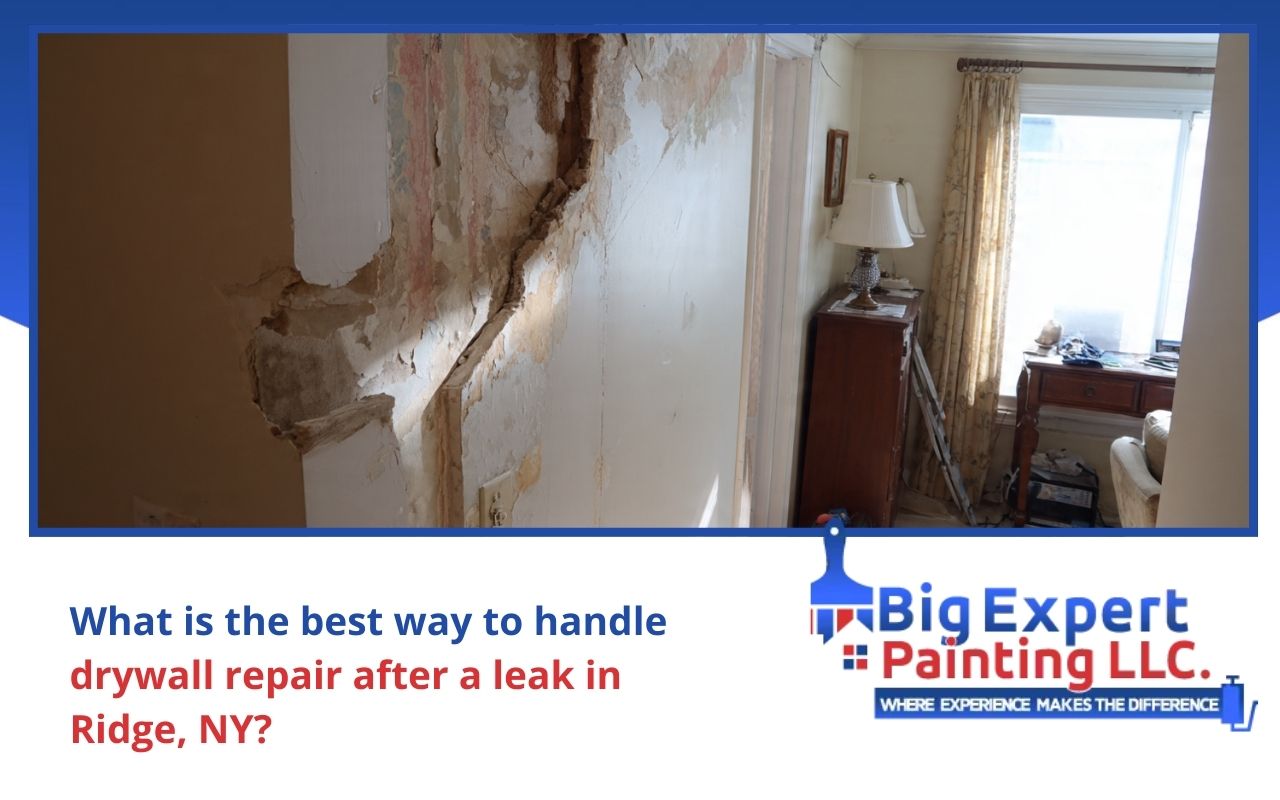
What is the best way to handle drywall repair after a leak in Ridge, NY?
Drywall damage after a leak can look scary. However, the fix is often simple and repeatable. In this guide, you’ll learn how to remove wet board, patch cleanly, and block stains. You’ll also learn how to keep moisture from coming back. Big Expert Painting LLC uses these same principles on real jobs.
What is the best way to handle drywall repair after a leak in Ridge, NY?
The best approach for Drywall repair after leak in Ridge, NY is to stop the leak first, dry the cavity fast, and remove any soft drywall. Next, install a tight patch, reinforce seams, and feather joint compound in thin coats. Then, use a primer stain-blocking coat before painting. Finally, keep humidity stable so the repair stays flat and stain-free.
1) Assess the damage before you cut
First, inspect the wall under bright light. Then, press gently for soft spots. Also, look for bubbling paint and sagging areas.
- Mark the stain perimeter, then add 1–2 inches beyond it.
- Check baseboards and corners, because water often travels.
- Look for musty odors, since hidden moisture can signal mold.
If you find widespread moisture, consider calling Big Expert Painting LLC for a site check. Also, take photos for your records before you start.
2) Gather tools and materials for a cleaner finish
Next, set up your workspace. Therefore, you avoid delays mid-repair. Also, cover floors, because drywall dust spreads fast.
- Utility knife, drywall saw, straightedge, tape measure, pencil
- Matching drywall, screws, drill/driver, backing wood if needed
- Joint compound, drywall tape, sanding block, fine-grit paper
- Primer stain-blocking product, paint, roller, angled brush
For service options, explore Professional Painting & Remodeling Services and plan your next steps with Big Expert Painting LLC.
3) Cut-out & patch: remove the weak drywall
Now, trace a clean rectangle around the damaged area. Then, cut slowly with the blade straight. However, avoid jagged edges, because they complicate taping later.
- Cut along your lines, then pull the damaged piece away carefully.
- Inspect the cavity, because wet insulation can hold moisture.
- Let framing dry fully before closing the wall.
This step matters most for Drywall repair after leak in Ridge, NY, because trapped moisture can cause repeat staining.
4) Prep the opening so the patch sits flush
Next, clean the edges and remove loose paper. Then, sand lightly for a flat transition. Also, add backing strips if the opening lacks a stud edge.
If you want a pro-grade approach, review Professional Drywall Repair in Amityville, NY and compare it to your repair plan. Big Expert Painting LLC can also match textures for a seamless look.
5) Install the patch and build thin coats
Then, measure the opening and cut the new drywall to fit. Next, screw it in so it sits level. After that, apply joint compound in a thin layer.
Let it dry fully. Then, add a second coat wider than the first. Therefore, edges disappear instead of forming ridges.
How-to: Tape and spackle the seams without visible lines
This is where most DIY repairs fail. However, the method is simple when you go slow.
- Apply a thin bed coat of compound on each seam.
- Embed tape, then press out bubbles immediately.
- Skim a light coat over the tape, then feather the edges.
- After drying, sand lightly, then wipe dust off.
- Apply one to two wider coats, sanding between coats.
For a detailed service overview, see Tape and Spackle. Also, if you want a turnkey finish, Big Expert Painting LLC can handle the full prep-to-paint process.
6) Prime, paint, and blend the sheen
After sanding, you need primer before paint. Therefore, stains won’t bleed through. Use a primer stain-blocking coat and extend past the patch edges.
Then, paint in thin coats. Also, match sheen carefully, because gloss differences show under light. For large areas, repaint the whole wall section for best blending.
This step is essential for Drywall repair after leak in Ridge, NY, especially when stains were dark or repeated.
7) Humidity control: keep the repair from coming back
Finally, stabilize indoor moisture. Otherwise, fresh compound can crack or swell later.
- Run a dehumidifier in damp months.
- Vent bathrooms and kitchens consistently.
- Fix small drips early, because slow leaks are common.
With steady humidity control, Drywall repair after leak in Ridge, NY lasts longer and looks cleaner.
FAQs
How do I know if I need to remove drywall after a leak?
If drywall feels soft, crumbles, or bulges, removal is usually necessary. Also, if staining grows, moisture may still be present. For service details, check Professional Drywall Repair in Amityville, NY.
What is the most reliable cut-out size for a clean patch?
A square or rectangle is best, because it simplifies backing and taping. Then, you can feather compound evenly. If you want a bundled solution, explore Professional Painting & Remodeling Services.
Should I use mesh tape or paper tape?
Both can work. However, paper tape often resists cracking when embedded correctly. For professional prep standards, see Tape and Spackle.
Why do water stains reappear after painting?
Stains can bleed through paint without the right primer. Therefore, use a primer stain-blocking product first, then repaint. For help planning the full finish, Big Expert Painting LLC can guide the sequence from repair to topcoat.
When should I hire a pro instead of DIY?
Hire a pro if the leak affected multiple rooms, if there’s suspected mold, or if texture matching matters. Also, hire help when ceilings are involved for safety. To schedule guidance, use Contact Big Expert Painting LLC – Get in Touch Now!.
Next steps for a smoother, faster result
If you want a clean, paint-ready finish, plan the steps before you cut. Also, prioritize drying, because moisture drives most failures. When you need a pro finish in one visit, Big Expert Painting LLC can coordinate repair and repainting. For exterior or whole-home painting support, review Professional House Painters in NY You Can Rely On.
In short, Drywall repair after leak in Ridge, NY works best when you remove soft board, reinforce seams, and block stains before paint. Also, keep humidity stable to protect the repair.
References
Follow Us


Book Now!