
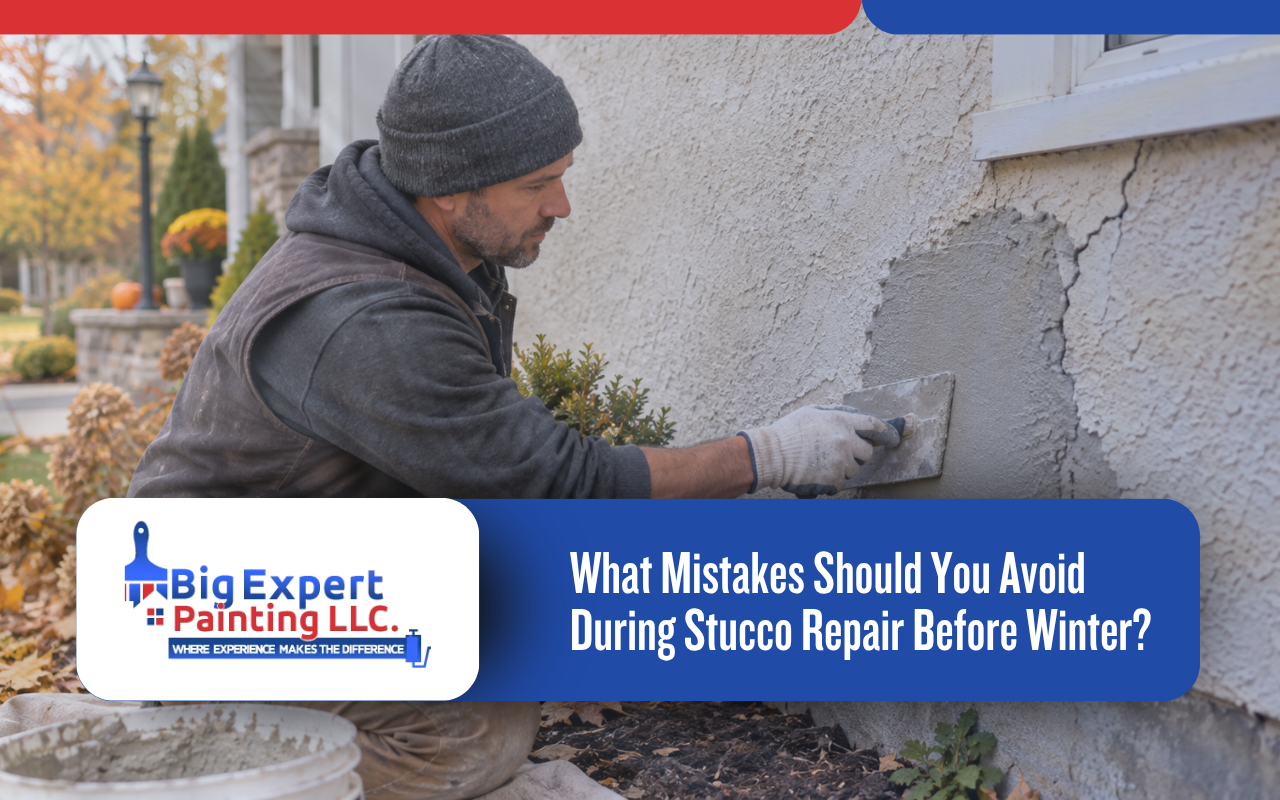
What Mistakes Should You Avoid During Stucco Repair Before Winter?
Common mistakes with stucco repair before winter include patching over moisture, using the wrong material, repairing in cold or wet conditions, and skipping surface preparation. These errors can weaken adhesion or hide the real problem.
Long Island fall weather can expose small exterior problems before colder conditions make them harder to address. Cracks, stains, and loose areas may allow water to reach vulnerable layers. At Big Expert Painting LLC, we look for the cause before recommending repairs.
Homeowners can review stucco repair and painting in Long Island before deciding how to proceed.
Inspect Stucco Cracks Before Winter Damage Spreads
Early inspection helps separate small surface cracks from signs that need closer review. Stucco cracks before winter deserve attention when they widen, appear near openings, return after patching, or sit beside stains.
Repeated or spreading cracks need more than a quick cosmetic fill. When homeowners contact Big Expert Painting LLC, we ask where the damage appears and what changes they have noticed.
Warning Signs to Check
- Cracks around windows and doors
- Bulging, soft, or hollow-sounding areas
- Stains below gutters or roof edges
- Loose or crumbling stucco sections
- Cracks that return after previous patching
If cracks are growing or several areas look loose, contact our team to discuss a closer review before cold weather.
Avoid These Stucco Repair Mistakes Before Winter
A winter repair plan should focus on the cause of the damage, not only the visible surface. Small mistakes can lead to poor bonding, trapped moisture, or repairs that fail after colder weather arrives.
Common Stucco Repair Mistakes
| Repair Mistake | Why It Causes Problems | Better Approach |
|---|---|---|
| Patching over moisture stains | Water may keep moving behind the surface. | Find and correct the moisture source first. |
| Skipping surface preparation | Loose material can weaken adhesion. | Remove unstable stucco and clean the repair area. |
| Using the wrong repair material | A poor match may crack or look uneven. | Choose material suited to the existing stucco. |
| Repairing during poor weather | Cold, wet, or frosty conditions can affect curing. | Plan work around suitable temperature and moisture conditions. |
| Painting too soon | The finish may interfere with the repair process. | Allow the repair to reach the required condition first. |
Stop Moisture Damage Stucco Problems at Their Source
Moisture must be traced before a patch is sealed over it. A moisture damage stucco problem may begin near failed joints, leaking gutters, poor drainage, or openings around doors and windows.
Covering the stain without correcting water entry can let deterioration continue behind the surface. Water-related damage may also become more serious when colder weather creates freeze-thaw stress around weak areas.
Learn more through stucco repair and painting in Long Island.
Plan Exterior Stucco Repair in Long Island for Durability
Material choice should match the existing surface and the size of the damaged area. For exterior stucco repair in Long Island, we consider crack width, surrounding texture, adhesion, and weather exposure.
A patch that is too rigid or poorly matched can crack again or remain visibly uneven. With Big Expert Painting LLC, you get a repair plan based on what we can see and inspect at the wall.
Repair Planning Basics
- Use exterior-rated repair material suitable for the existing stucco.
- Match the surrounding texture before finishing.
- Keep repair areas clean and free of loose material.
- Do not coat a patch before it is ready.
- Review nearby gutters, joints, and water-entry points.
For larger or recurring damage, contact our team so we can review the condition before work begins.
Prepare Stucco Surfaces for Stronger Adhesion
Surface preparation gives repair material a better chance to bond evenly. Loose stucco, dust, dirt, and failing material should be removed before patching.
Applying new material over an unstable surface can create weak edges, poor adhesion, and an obvious repair line. We start by clearing failed material and checking whether nearby stucco remains sound.
Then we clean the repair area and prepare it for the selected patch. Texture matching comes later, after the repair is placed correctly. Good preparation solves a bond problem before it becomes a finish problem.
Follow a Clear Winter Stucco Repair Process
A clear repair process helps homeowners understand what happens before work starts and what we need to inspect. At Big Expert Painting LLC, we begin with the visible damage, then review likely moisture sources, surface condition, and repair scope.
The goal is to solve the cause before finishing the appearance. We keep the conversation focused on what the wall needs, rather than adding steps that do not solve the problem.
Our Repair Planning Process
- Tell us where cracks, stains, or loose areas appear.
- We inspect the stucco and nearby water-entry points.
- We explain which areas need repair and why.
- We prepare and patch the surface using suitable materials.
- We review the finished area and next maintenance steps.
Before scheduling, photos or a short description can help us understand the concern. For questions about timing or repair scope, contact our team.
Frequently Asked Questions
When should stucco cracks be checked before winter arrives?
Check cracks during fall, before repeated freezing conditions begin. Pay attention to new cracks, widening lines, stains, or loose areas.
Can small stucco cracks allow moisture behind exterior walls?
Yes. Some cracks and failed joints can create paths for water, especially around openings and transitions. Moisture can travel beyond the surface opening.
Should damaged stucco be painted immediately after patching?
Not always. A repair should reach the condition required by the selected material before primer or finish is applied. Painting too soon can interfere with the intended repair process.
Why does repaired stucco sometimes crack again later?
Cracks can return when the original cause was not corrected, movement continues, or the patch does not match the surrounding material.
What should homeowners share before booking a stucco inspection?
Share where the damage is located, when you first noticed it, and whether stains or cracks have changed. Photos can also help describe the issue.
Protect Your Long Island Stucco Through Winter
Winter preparation is easier when visible stucco damage is reviewed before colder conditions narrow repair options. When you work with Big Expert Painting LLC, we explain what we see, where moisture may be entering, and which next step fits the condition.
For practical guidance on stucco repair before winter, contact our team and tell us what you have noticed.
References
Follow Us


Book Now!