
When to Paint Exterior House Long Island Fall Deadline?
Long Island homeowners lose safe painting days quickly once fall nights turn cool and damp. If your siding, trim, shutters, or entry areas need attention, planning early helps protect the finish.
Our team can review your project through Exterior Painting in Long Island, NY before cold weather limits the schedule.
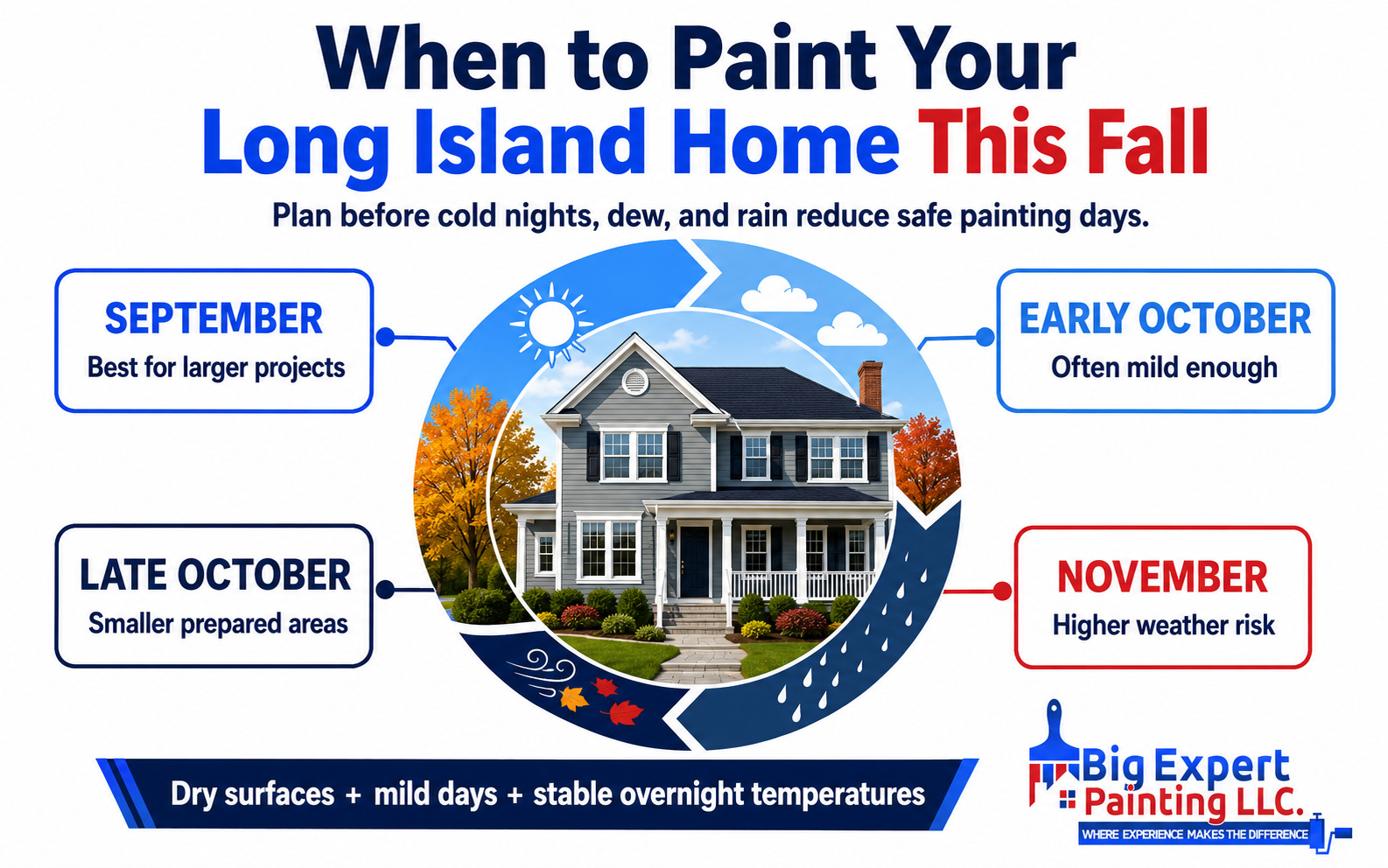
The when to paint exterior house Long Island fall deadline usually depends on mild days, dry surfaces, and safe overnight temperatures. For many homes, September and October offer better conditions than November because paint needs stable weather to dry, bond, and cure before colder nights arrive.
Plan Your Long Island Fall Painting Deadline
Timing matters because exterior paint needs more than one warm afternoon. It needs dry siding, steady air, and enough curing time before evening moisture arrives.
At Big Expert Painting, we look at daytime highs, overnight lows, rain risk, and surface condition before recommending a fall painting window.
NOAA climate normals for Islip MacArthur Airport show October averages near 64.1°F for daily highs and 47.3°F for daily lows. November averages drop to about 53.6°F for highs and 37.6°F for lows.
That shift makes October more dependable for large exterior projects.
Fall Painting Planning Tips
- Start planning in late summer or early September.
- Watch several dry days, not one warm afternoon.
- Check shaded walls because they stay cooler longer.
- Leave extra time for prep, primer, and drying.
Choose the Last Month to Paint Exterior Surfaces
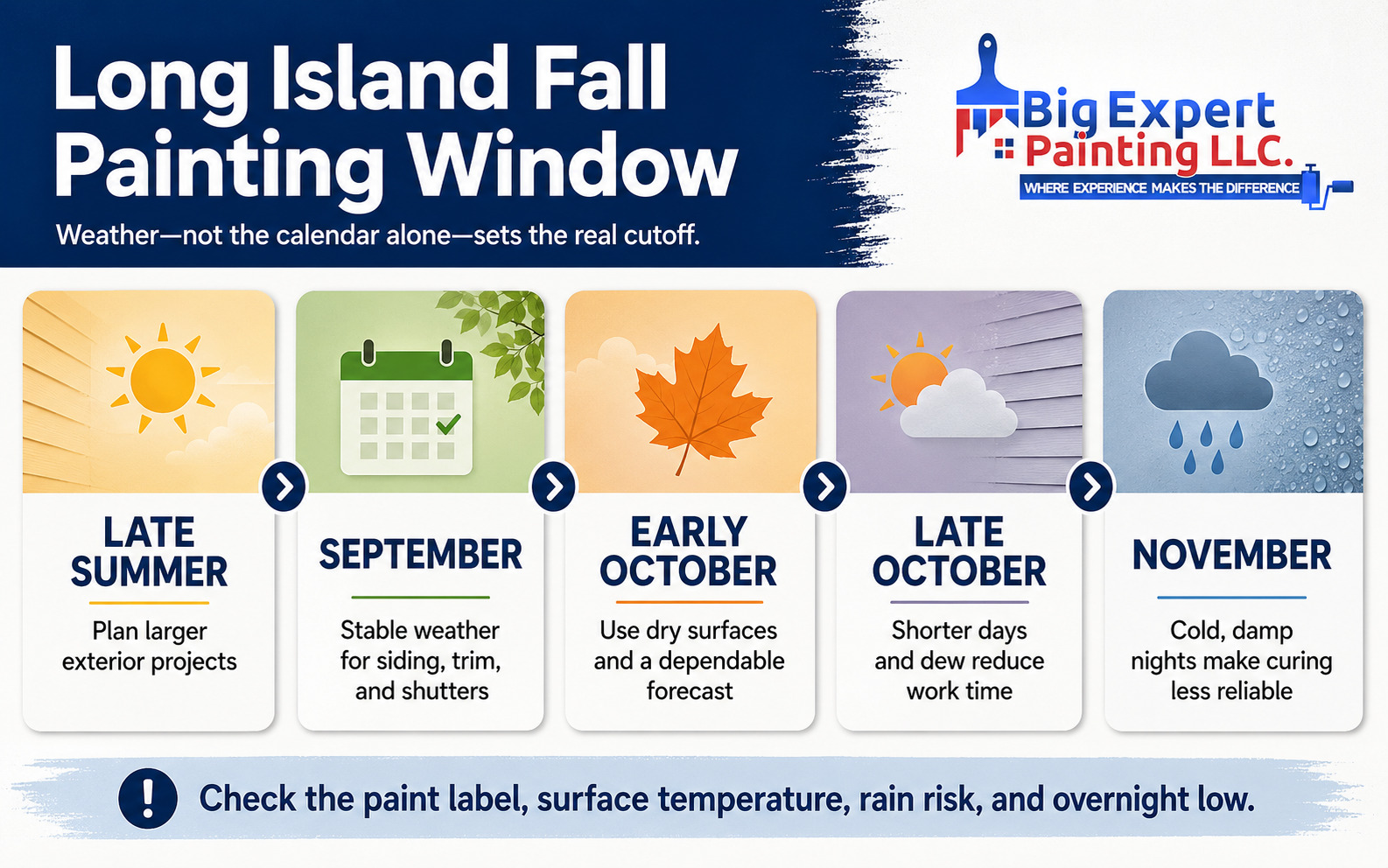
The last month to paint exterior surfaces on Long Island is often October for full-house projects, but the weather decides the real cutoff. Some early November days may work for smaller areas, yet colder nights make drying less reliable and reduce the daily work window.
When customers contact Big Expert Painting, we explain that a calendar date is only a guide. A dry October week can be safer than a mild November day followed by cold, damp air.
The National Park Service notes that exterior paint must withstand temperature and humidity extremes, which is why careful prep matters.
Fall Painting Timing Guide
- Better choice: September or early October for bigger work.
- Possible choice: late October for smaller, prepared areas.
- Riskier choice: November when nights turn cold or wet.
Before booking, review the surface, product label, and weather forecast. For guidance on house exteriors, visit Exterior Painting in Long Island, NY.
Key Takeaway
For most Long Island homes, September and October are safer than November because exterior paint needs dry surfaces, mild days, and stable overnight temperatures.
Compare Long Island Fall Painting Windows
A simple weather-based guide can help homeowners decide when to move forward, when to be cautious, and when to postpone exterior painting until conditions improve.
Exterior Painting Fall Deadline Guide
| Timing Window | Why It Matters | Best Use |
|---|---|---|
| Late summer | Warmer days and longer drying windows usually give paint more time to cure. | Best time to plan larger exterior projects. |
| September | Weather is often more stable before cool nights become common. | Good choice for siding, trim, shutters, and full-home projects. |
| Early October | Many days may still be mild enough, but schedules can tighten quickly. | Useful for prepared projects with dry surfaces. |
| Late October | Shorter days, dew, and colder nights can reduce safe painting time. | Better for smaller areas if product limits and weather allow. |
| November | Cold nights and damp conditions often make curing less reliable. | Riskier for exterior painting unless conditions are clearly suitable. |
Check the Minimum Temperature for Exterior Paint
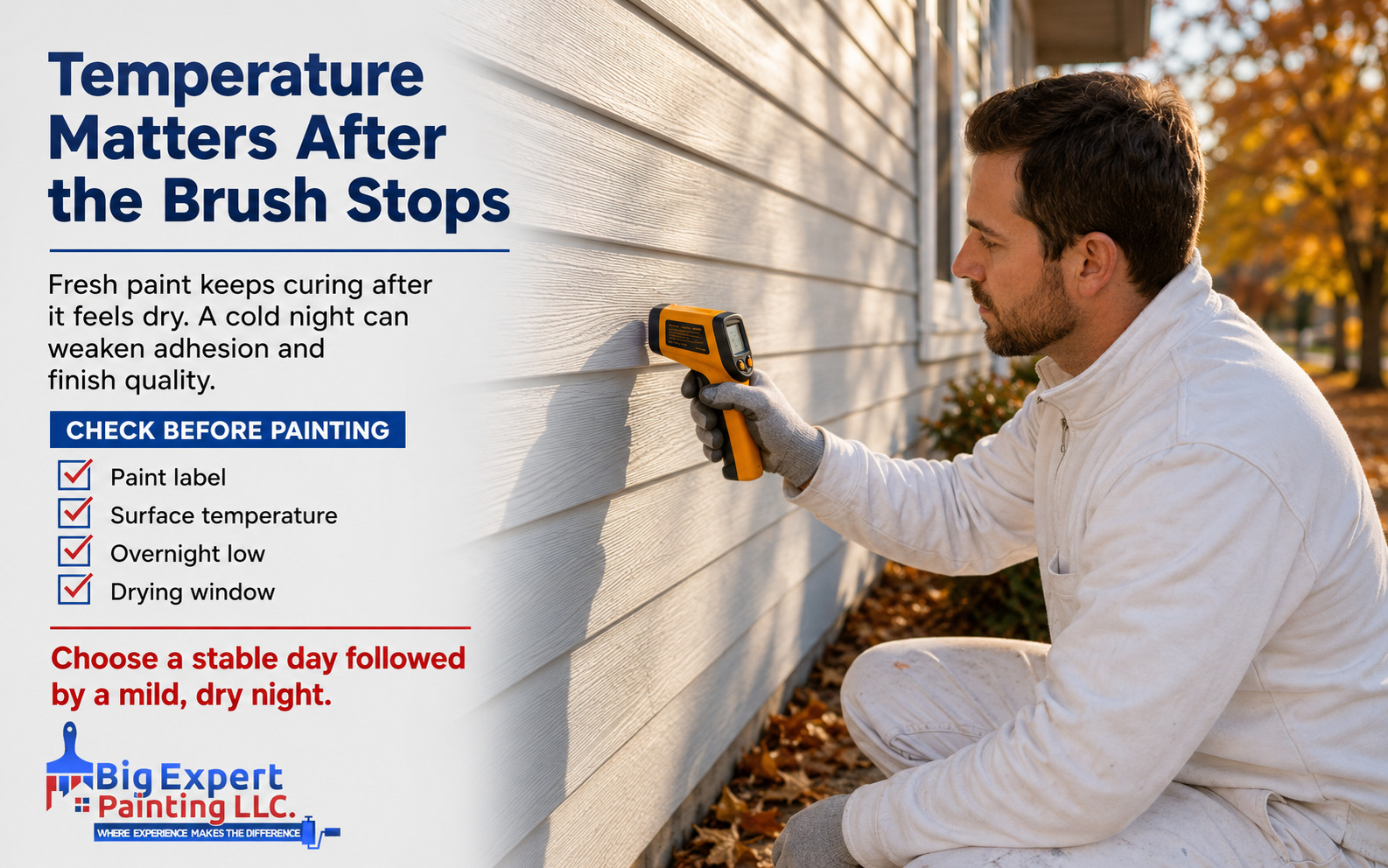
The minimum temperature for exterior paint depends on the product, the surface, and the drying period after application. Many labels require stable temperatures around 50°F, while some cooler-weather products allow lower limits when the manufacturer says so.
The label should guide every decision. A wall can be colder than the air, especially in shade or near damp landscaping.
Because of that, our team checks more than the afternoon high. We also consider how fast temperatures may fall after sunset.
Painting too close to the minimum limit can slow curing and weaken adhesion. It can also cause dull areas, uneven color, or early peeling.
For the when to paint exterior house Long Island fall deadline, the safest choice is a stable day followed by a mild, dry night.
Key Takeaway
The paint label, surface temperature, overnight low, moisture level, and drying window all matter before scheduling fall exterior painting.
Prevent Moisture Problems During Fall Painting
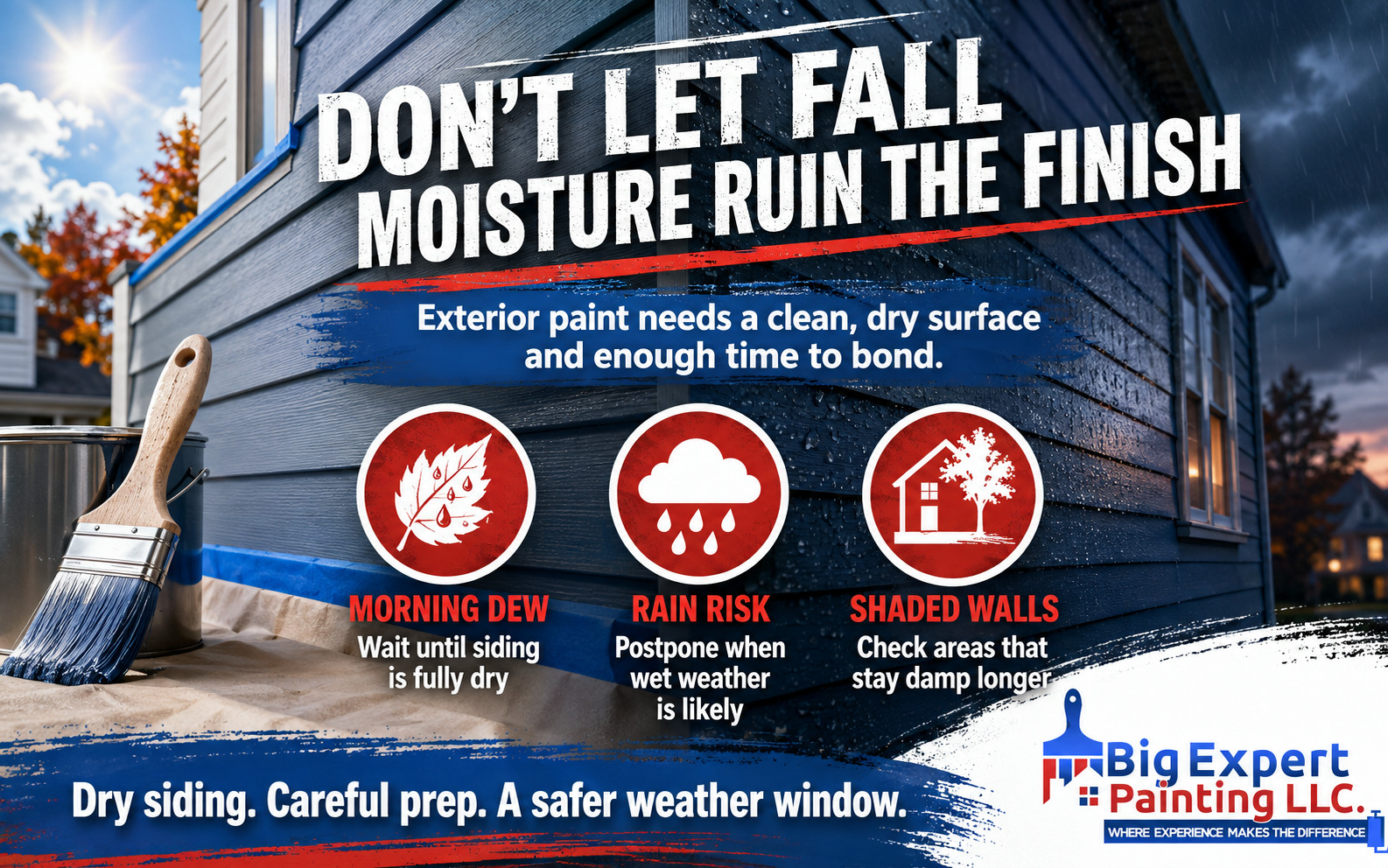
Fall exterior painting in Long Island needs dry surfaces because dew, rain, and trapped moisture can harm the coating. Even without rain, siding can stay damp in shaded areas.
Paint should not be applied until the surface is clean, dry, and ready to bond. Moisture is one of the main reasons exterior paint fails.
The National Park Service explains that moisture penetration contributes to wood deterioration, and preparation mistakes can lead to paint failure. We check peeling areas, chalking, bare wood, soft trim, and damp spots before work begins.
Moisture Checks Before Painting
- Do not paint over morning dew.
- Wait after washing so siding dries fully.
- Postpone work when rain is likely soon.
- Inspect bare wood before primer or paint.
With Big Expert Painting, you get a clearer plan before the work starts. That helps avoid rushed painting during unsafe fall weather.
Schedule the Exterior Painting Process Clearly
A clear process helps homeowners feel ready before fall weather changes. After you call or send a message, we ask about the surfaces, paint condition, timing goals, and any areas that worry you.
Then we explain practical next steps without promising weather we cannot control. Before an appointment, we may ask about peeling paint, previous repairs, siding material, access, and whether the home has shaded or damp areas.
During the review, Big Expert Painting can check surface prep needs and explain what should happen before painting begins.
Exterior Painting Process Steps
- First step: review the project and weather window.
- Next step: inspect siding, trim, and problem areas.
- Then: explain preparation, product choices, and scheduling.
- Afterward: help you understand care and drying needs.
To start the process, use Contact Big Expert Painting LLC – Get in Touch Now! and share your exterior painting goals.
Key Takeaway
Fall exterior painting works best with dry siding, careful prep, product-label guidance, and a schedule that accounts for dew, rain, and cold nights.
Frequently Asked Questions
Is October usually safe for exterior painting on Long Island?
October can be safe when days are mild, surfaces are dry, and nights stay within the paint label’s limits. It is often better than November for larger work. For project guidance, visit Exterior Painting in Long Island, NY.
Can painters work if temperatures drop overnight after painting?
Overnight temperatures matter because fresh paint may still be curing after it feels dry. If the temperature falls below the product’s safe range too soon, adhesion and finish quality can suffer. A mild, dry night after painting gives the coating a better chance to cure evenly.
What weather signs mean exterior painting should be postponed?
Painting should be postponed when rain, heavy dew, damp siding, strong wind, or cold nights are expected. These conditions can slow drying and damage the finish. To discuss safer timing, use Contact Big Expert Painting LLC – Get in Touch Now!.
Does morning dew affect fall exterior paint results?
Yes, morning dew can leave siding too wet for paint to bond well. Shaded areas may stay damp longer than sunny walls. Waiting until the surface is fully dry helps prevent bubbling, streaks, weak adhesion, and other finish problems during fall exterior painting in Long Island.
Should I paint small exterior areas later in November?
Small protected areas may be possible on mild November days, but the risk is higher. Check the paint label, surface temperature, and overnight forecast first. For a professional review, visit Exterior Painting in Long Island, NY.
Protect Your Home Before Long Island Weather Turns Colder
The when to paint exterior house Long Island fall deadline is easiest to manage before cold nights, dew, and rain reduce safe painting days. If your exterior needs attention, Big Expert Painting can review the timing, prep needs, and next steps.
Start through Contact Big Expert Painting LLC – Get in Touch Now! before the season becomes less reliable.
References
Follow Us


Book Now!