
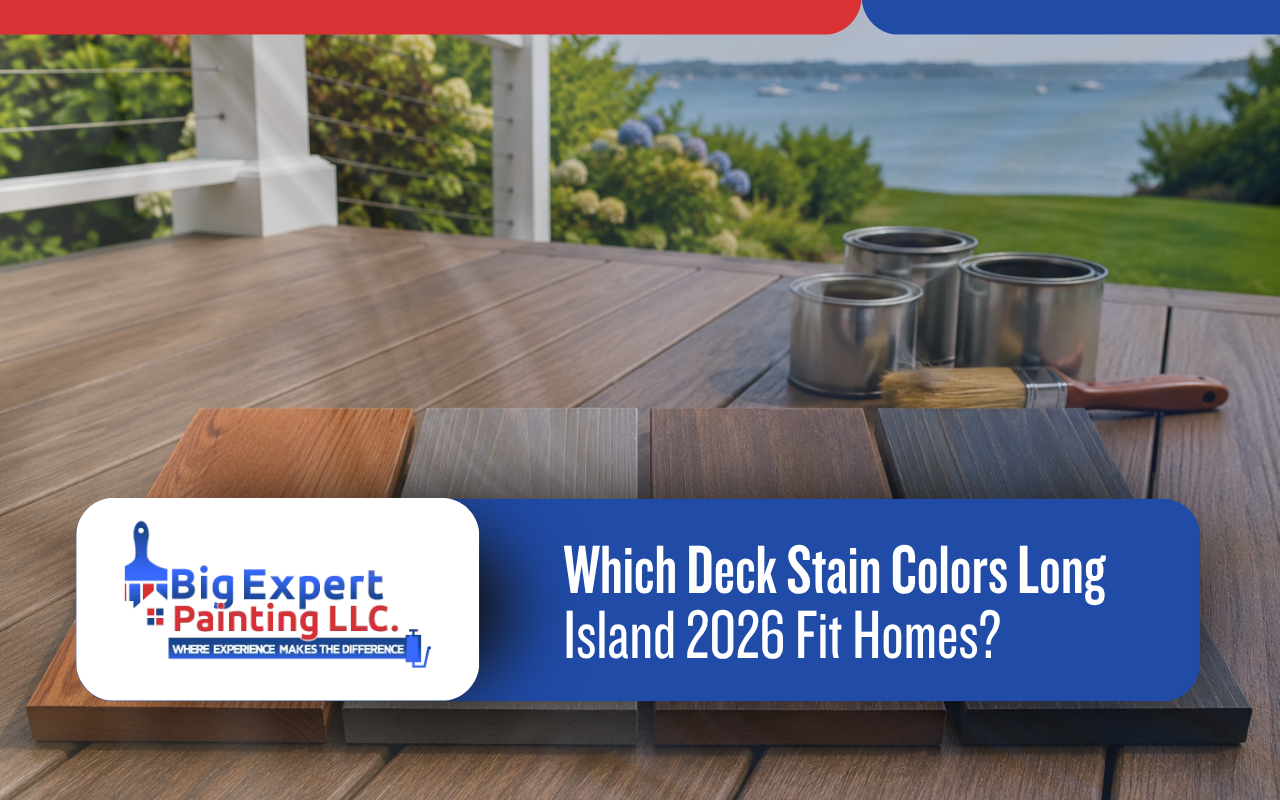
Which Deck Stain Colors Long Island 2026 Fit Homes?
Deck stain colors Long Island 2026 homeowners should consider include driftwood gray, warm cedar, honey brown, charcoal, and muted coastal shades. The right choice should complement the house, suit the deck’s sunlight, reveal or hide wood grain, and support the homeowner’s preferred maintenance level.
Which Deck Stain Colors Long Island 2026 Fit Homes?
Deck stain colors Long Island 2026 refers to stain shades suited to current outdoor design preferences and local conditions. Homeowners need these options when an aging deck looks faded, disconnected, or worn. The right stain improves appearance, supports wood protection, and creates a more welcoming outdoor area.
Choose Deck Stain Trends That Match Outdoor Style
The strongest 2026 stain choices balance natural warmth with clean contrast. Homeowners can choose soft grays, cedar tones, rich browns, or charcoal accents. Each color group creates a different look and should connect with the home’s exterior.
Soft driftwood gray works well for a relaxed coastal look. It pairs naturally with white railings, blue accents, and weathered shingles. Warm honey, chestnut, and cedar shades highlight grain and knots. These wood stain colors work well with stone, brick, gardens, and traditional homes.
Charcoal and slate shades create stronger contrast. However, darker colors can feel heavy on large decks, so testing a sample first is important.
Popular 2026 Deck Color Ideas
- Choose driftwood gray for a calm coastal style.
- Select cedar or honey brown for natural warmth.
- Use chestnut for a deeper classic finish.
- Consider charcoal for modern contrast and sharp edges.
- Add muted blue or green only as a small accent.
The U.S. Forest Service explains that sunlight, water, and weathering affect exterior wood and its finish. Color should be considered together with finish type, moisture exposure, and surface protection.
Match the Stain Color With Architecture and Light
A successful deck palette starts with the fixed parts of the home. Look at siding, roof color, trim, doors, stone, and landscaping. Then consider sunlight, deck size, furniture, foot traffic, and daily use.
Warm homes with beige siding, cream trim, or brick often pair well with cedar, honey, or chestnut. Cool homes with white, blue, or gray exteriors often pair well with driftwood or charcoal.
Deck size also matters. Light colors can make a small deck feel more open. Deeper shades can give a large deck more shape and definition.
Deck Color Planning Table
| Color Direction | Best Match | Practical Note |
|---|---|---|
| Driftwood gray | Coastal homes, white trim, and cool siding | Creates a light and calm look. |
| Warm cedar | Brick, beige siding, stone, and green landscaping | Highlights natural grain and warmth. |
| Chestnut brown | Traditional homes and classic outdoor furniture | Creates a rich and grounded finish. |
| Charcoal | Modern homes, pale siding, and simple railings | Adds contrast but may feel warmer in direct sun. |
| Muted coastal accent | Railings, benches, steps, or planters | Adds style without taking over the full design. |
Before Choosing a Final Sample
- Compare the stain with the home’s siding and trim.
- View the sample during morning, midday, and evening light.
- Check how the color looks near furniture and plants.
- Decide how much wood grain should remain visible.
- Confirm that the existing finish accepts the selected product.
For more preparation guidance, review our deck sanding tips.
Key Takeaway
Current deck stain colors work best when they match the house, respond well to sunlight, and fit how the deck is used every day.
Use Natural Wood Tones to Preserve Grain
Natural stain colors keep the deck connected with the yard and landscape. Cedar, pine, honey, redwood, and soft brown shades reveal wood character while giving the surface a more even look.
A cedar deck stain can make pale or weathered boards appear warmer. Cedar tones also pair well with stone paths, wood fencing, black hardware, and neutral outdoor fabrics.
Semi-transparent finishes work best when the grain still looks attractive. Damaged, patched, or uneven boards may need more color coverage.
Natural Wood Stain Colors Work Well For
- Visible grain and knots
- A rustic or traditional mood
- A simple link with garden materials
- Warmth without a bold color change
- A finish that ages with a softer look
Big Expert Painting LLC checks the wood species, old coating, board condition, and sun exposure before recommending a finish type. This helps match the desired look with the real surface.
Add Charcoal Accents for Modern Contrast
Charcoal creates a modern frame around light siding, pale railings, and green landscaping. It can work well on deck boards, stairs, borders, or built-in features.
Useful charcoal deck stain ideas include dark flooring with white railings. Homeowners can also use cedar boards with charcoal edges or stair risers for contrast.
Charcoal pairs well with cream cushions, natural wood furniture, and simple planters. However, too many dark elements can make the space feel smaller.
Simple Three-Part Palette
- Use one main stain across the deck surface.
- Add one support shade on railings, borders, or steps.
- Choose one accent color for furniture, planters, or fabrics.
Leave a stain sample on the deck for several viewing periods. Compare it in full sun, shade, and evening light before making the final choice.
Homeowners considering a full finish change can explore our professional deck painting services.
Key Takeaway
Natural shades reveal wood character, while charcoal adds definition when the wider palette stays simple and balanced.
Prepare the Deck Before Applying New Stain
Good preparation helps stain absorb evenly and show the intended color. The deck should be inspected, cleaned, dried, and smoothed before application.
Loose coatings, damaged boards, mildew, raised fibers, and trapped moisture can weaken both appearance and performance. A new stain cannot fix soft or unstable wood, so repairs should come first.
Deck Stain Prep Checklist
- Remove furniture, planters, rugs, and loose debris.
- Inspect boards for rot, movement, splitting, or sharp edges.
- Clean dirt, mildew, and old surface residue.
- Allow the wood to dry fully after washing.
- Sand raised fibers, rough areas, and unstable coating edges.
- Test the stain on a small, hidden area.
- Apply the product according to its label and weather limits.
Damaged areas should be handled first through our deck repair services.
Maintain Deck Color Through Long Island Seasons
Regular care helps the selected color stay clear and even. Remove debris, address spills, monitor shaded areas, and inspect high-traffic boards. Early care is easier than restoring a finish after heavy fading, flaking, or moisture damage appears.
Sweep leaves and dirt before they hold moisture against the boards. Keep planters raised so water can drain and air can move underneath. Clean the surface with methods approved for the existing stain.
Maintenance Areas to Watch
- Railings and handrails
- Steps and board ends
- Areas near downspouts
- Shaded or damp corners
- High-traffic walking paths
When the surface looks uneven, review how to repaint a deck before adding another finish.
Key Takeaway
Preparation builds the base for even color. Routine checks help keep small deck issues from turning into full refinishing projects.
Frequently Asked Questions
How do I know which deck stain color fits my house?
Compare samples with the siding, trim, roof, stone, and landscaping. Then view each sample during several daylight periods. A good shade should connect with the house without copying every exterior color.
When should I choose a cedar deck stain?
Choose cedar when you want warmth, visible grain, and a simple link with brick, stone, fencing, or gardens. Cedar tones also suit traditional and rustic homes.
Why is charcoal stain popular on modern decks?
Charcoal creates strong contrast with light siding, white railings, and green landscaping. It can also define steps, borders, or built-in seating.
What happens if I stain damaged deck boards?
Stain may improve color, but it cannot restore weak, soft, or moving wood. Damaged boards can also create safety and finish problems. Arrange an inspection through our deck repair services before staining.
How do I prepare an older deck for new stain?
First, remove furniture and debris. Then clean the deck, let it dry, repair damaged wood, and sand rough areas. Finally, test the new finish for appearance and fit.
Bring Your Deck Color Plan Together
A good deck palette should feel connected, practical, and easy to maintain. Big Expert Painting LLC can inspect the surface, explain finish options, and help you compare samples.
Use our contact page to begin planning a refreshed Long Island deck.
References
Follow Us


Book Now!