
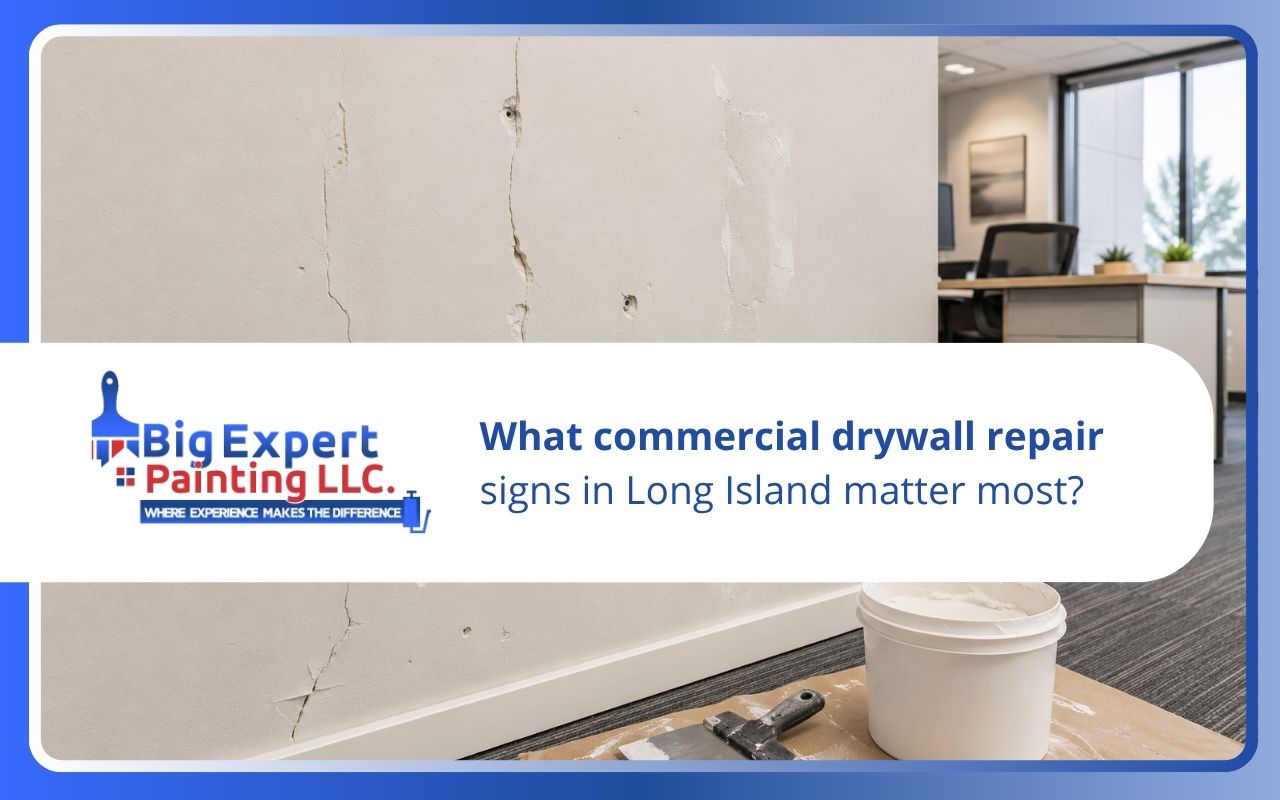
What commercial drywall repair signs in Long Island matter most?
Wall damage can quietly affect daily business on Long Island, especially in offices, retail spaces, and customer-facing rooms. When cracks, stains, or soft drywall appear, the next step should be clear. For related finish planning after repairs, review Commercial Painting in Long Island before updating your space.
What commercial drywall repair signs in Long Island matter most?
Commercial drywall repair signs in Long Island include cracks, stains, bulges, peeling paint, mold spots, sagging ceilings, and impact holes. These signs can point to moisture, building movement, wear, or check hidden damage before the wall problem grows.
For many business owners, drywall repair starts with finding the cause of visible wall damage. The work may include checking cracks, replacing soft panels, patching holes, sanding surfaces, and preparing walls for paint. It helps offices, stores, and other business spaces stay clean, safe, and professional.
Spot cracked commercial drywall before deeper wall problems grow
Cracks in commercial walls are early warning signs because they can show movement, panel stress, or repeated impact. Small lines may look minor, but recurring cracks deserve attention when they return after patching or appear in several rooms.
Cracked commercial drywall often shows near seams, door frames, corners, and wall joints. At Big Expert Painting LLC, we look at the crack size, pattern, and surrounding surface before recommending the next step. For wall updates that may follow repair, Commercial Interior Painting can help the finished space look consistent.
- Hairline cracks may need filling and repainting.
- Wide cracks may need tape, compound, and closer review.
- Repeated cracks may point to movement or moisture.
Trace water damage before office wall repair becomes urgent
Water damage should be checked quickly because drywall can soften, swell, stain, or lose strength after moisture gets inside. The EPA explains that moisture control is key to mold control, so finding the water source matters first.
Long Island commercial buildings may see damp spots near windows, plumbing, ceilings, and exterior-facing walls. Office wall repair should not begin with paint alone when stains or bubbles are present. The affected area may need drying, damaged material removal, surface preparation, and a repair plan that helps stop the issue from returning.
When customers contact Big Expert Painting LLC, we ask where the stain started, whether the area feels soft, and whether the problem has spread. That information helps us understand the repair scope before work begins.
Visible surface changes can show hidden drywall problems before a wall fails. Peeling paint, bowed panels, musty odors, and soft spots may point to moisture, poor adhesion, damaged backing, or weakened drywall behind the finish.
Damaged drywall in business property can affect more than appearance. A lobby wall with dents may hurt first impressions. A soft wall near a restroom may suggest a leak. A bowed panel may need removal so the area behind it can be checked. The CDC’s NIOSH workplace mold guidance notes that dampness and mold in buildings can become health concerns for occupants.
- Peeling paint may point to moisture or poor bonding.
- Bulging drywall may show trapped water or loose panels.
- Mold spots may need moisture control before repair.
- Sagging ceiling drywall may create a safety concern.
- Dents and holes may spread in high-traffic areas.
With Big Expert Painting LLC, you get clear guidance before damaged areas are patched, sanded, or prepared for a clean finish.
Schedule repairs with a clear business property process
A clear repair process helps business owners understand what happens before walls are opened, patched, or painted. It also helps reduce surprises because the damaged area, surface condition, and finish review before repair begins.
When property managers call Big Expert Painting LLC, we ask about the location, wall condition, building use, and whether painting is planned after the drywall work. Then we review the visible damage and explain practical repair options. If replacement is needed, Drywall Installation Services may support a better long-term result.
- Share photos or describe the wall damage.
- Review cracks, stains, soft areas, or holes.
- Identify whether moisture or impact caused damage.
- Repair, sand, prime, and prepare the surface.
- Discuss the finish needed after the repair.
Protect staff and clients with safer drywall decisions
Drywall problems should be treated as property concerns, not only cosmetic issues. Damaged walls can affect safety, indoor comfort, energy efficiency, and the professional image customers notice when they enter your business.
Before you contact Big Expert Painting LLC, note whether the problem is new, growing, wet, soft, or near electrical fixtures. Water near outlets needs extra caution, and electrical concerns should be handled by a qualified professional. Early wall repair can help protect staff, clients, equipment, and finished interiors.
Business owners should not ignore commercial drywall repair signs in Long Island when they appear in busy halls, offices, restrooms, waiting areas, or retail spaces. A simple inspection can help decide whether patching, replacement, or finish work is the right next step.
Frequently Asked Questions
What are common signs commercial drywall needs repair?
Common signs include cracks, stains, peeling paint, soft areas, holes, bulging panels, mold spots, and sagging ceiling drywall. If several signs appear together, the wall may need more than a surface patch. For related service information, visit Contact Big Expert Painting.
Why does cracked commercial drywall keep coming back?
Cracks may return when the wall moves, the seam lacks support, moisture remains inside, or the previous patch did not address the cause. Repeated cracks should be checked before repainting, because paint can hide the problem for a short time.
When should office wall repair happen after water stains?
Office wall repair should happen after the moisture source is found and the affected area is dry. Repairing too soon can trap dampness behind new compound or paint. If the area spreads, softens, or smells musty, request a wall review through Contact Big Expert Painting.
Can damaged drywall in business property affect customers?
Yes, damaged drywall in business property can affect customer trust, comfort, and safety. Visible holes, stains, and sagging areas may suggest poor maintenance. Smooth wall repair helps create a cleaner setting for offices, stores, restaurants, and other customer-facing spaces.
Should drywall be repaired before commercial interior painting?
Yes, drywall should be repaired before commercial interior painting because paint will not fix cracks, holes, or soft wall areas. A smooth surface helps the finish look cleaner and last longer. Learn more about finish planning through Commercial Interior Painting.
Choose timely wall care before damage affects business
Commercial drywall repair signs in Long Island should be checked before cracks widen, stains spread, or wall surfaces lose strength. If your office, shop, or commercial space has visible wall damage, use Contact Big Expert Painting to share what you see and request the next practical step.
References
Follow Us


Book Now!